


How Great Trial Lawyers Teach Instead of Perform
Every trial lawyer eventually discovers that direct examination—not cross-examination—is where credibility is built.
George J. Lavin, Jr., Esquire devoted an entire chapter of Silent Advocacy to explaining why preparation, witness organization, and teaching the jury quietly win far more cases than courtroom theatrics ever could.
Chapter XI remains one of the most practical discussions of direct examination ever written for trial lawyers.
Direct examination is where juries often decide whether they trust a lawyer’s case. In Chapter XI of Silent Advocacy, George J. Lavin, Jr., Esquire explains why meticulous witness preparation, organized evidence, and clear teaching—not courtroom performance—are the foundations of successful trial advocacy.
Key Takeaways
- Direct examination is often where juries decide whether to trust your case.
- Silent Advocacy begins long before trial with meticulous witness preparation.
- Jurors value clarity, honesty, and organization more than drama.
- Every witness should educate the jury—not simply answer questions.
- Great trial lawyers prepare witnesses to educate the jury—not memorize testimony.
- Trial advocacy is about earning credibility, not commanding attention.
Can a Case Be Won During Direct Examination?
Many lawyers think the most exciting part of a trial is cross-examination.
Movies and television certainly reinforce that perception. Dramatic confrontations, rapid-fire objections, and emotional exchanges often become the defining moments of fictional courtroom dramas.
George J. Lavin, Jr., Esquire saw trials differently.
Throughout Silent Advocacy, Lavin repeatedly returned to one central idea:
The strongest cases are usually built—not during cross-examination—but during direct examination.
That may surprise young lawyers, but experienced trial attorneys understand exactly what he meant.
Jurors decide whether they believe a case long before closing arguments. They begin forming opinions while listening to witnesses explain events in a logical, understandable manner.
Direct examination is where credibility is earned.
Silent Advocacy Begins Before Trial Ever Starts
One of Lavin’s most practical lessons is that preparation begins long before the first witness is sworn.
Every witness deserves a complete preparation file.
Every exhibit should already be organized.
Potential evidentiary issues should already have been anticipated.
Legal memoranda should already exist if foundation or admissibility questions are likely to arise.
This level of preparation accomplishes something that jurors never see—but always experience.
The trial appears calm.
Organized.
Professional.
That is Silent Advocacy.
Instead of reacting to problems, prepared lawyers quietly prevent many of them from ever occurring.
Direct Examination Is Teaching
Perhaps the most important lesson in these chapters is that direct examination is not a speech.
It is not an opportunity for the lawyer to perform.
Instead, the attorney becomes a teacher.
The witness provides the facts.
The lawyer organizes those facts into a story the jury can understand.
Lavin reminds readers that every witness possesses his or her own personality, communication style, and credibility. Rather than attempting to overshadow the witness, effective lawyers allow witnesses to educate the jury through careful questioning.
The result is remarkably powerful.
Jurors frequently remember witnesses who explain difficult concepts simply and honestly.
They rarely remember attorneys attempting to dominate the courtroom.
Winning the Respect of the Jury
One sentence in this chapter deserves particular attention.
Lavin writes that trial is ultimately a battle for the respect of the jury.
That observation remains just as true today.
Respect cannot be demanded.
It must be earned.
Jurors evaluate far more than legal arguments.
They notice:
- professionalism
- organization
- courtesy
- honesty
- preparation
- respect shown toward witnesses
- respect shown toward opposing counsel
- respect shown toward the Court
These qualities quietly shape credibility throughout the trial.
They are the very essence of Silent Advocacy.
Preparing Witnesses Is Preparing the Case
Witness preparation extends well beyond reviewing anticipated testimony.
Lavin encourages attorneys to think carefully about:
- prior depositions
- prior statements
- anticipated cross-examination
- witness demeanor
- courtroom procedures
- exhibit usage
- sequencing of testimony
- language the jury will understand
He also reminds attorneys that witnesses should understand the courtroom itself.
Where will they sit?
Where is the jury?
Where is the judge?
What should they expect?
These seemingly small details reduce anxiety and allow witnesses to focus on communicating clearly rather than worrying about unfamiliar surroundings.
The COIK Rule: Clear Only If Known
One of the memorable concepts introduced in this chapter is what Lavin refers to as the COIK Rule—
Clear Only If Known.
The lesson is simple.
The lawyer’s understanding is irrelevant.
The only understanding that matters belongs to the jury.
If jurors do not understand the testimony, then the testimony has little value.
That means lawyers must continually evaluate whether witnesses are communicating clearly rather than assuming technical language will be understood.
The goal is always education.
Never confusion.
“The lawyer’s understanding is irrelevant. The only understanding that matters belongs to the jury.”
Acknowledgment
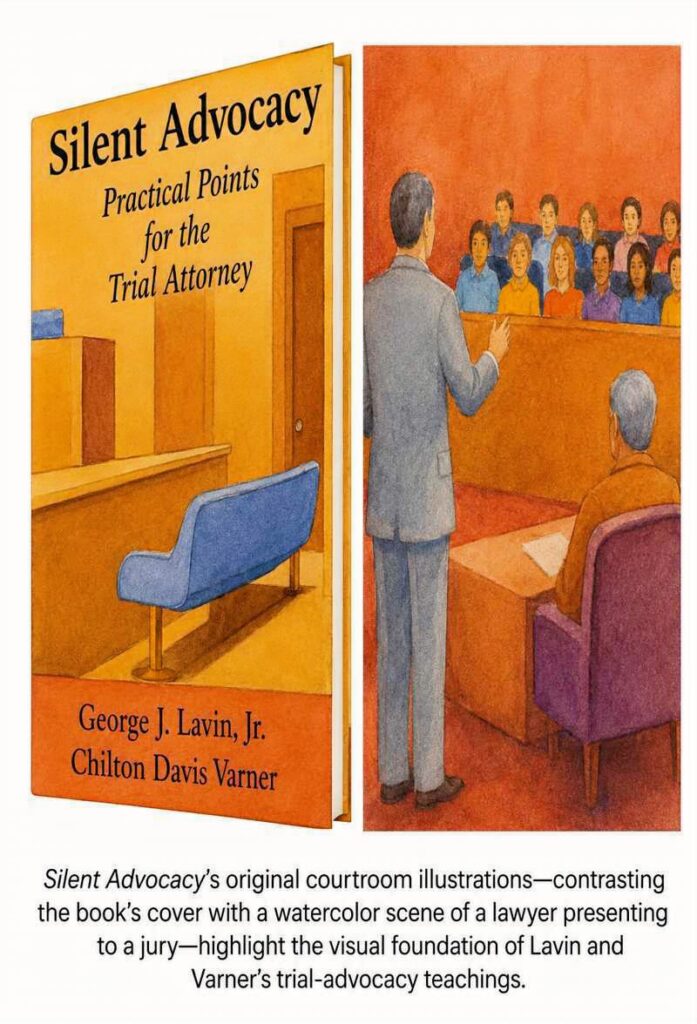
Silent Advocacy reflects not only the insights of George J. Lavin, Jr., Esquire, but also the thoughtful collaboration of Chilton Davis Varner, Esquire, whose contributions helped shape many of the concepts discussed throughout the book. A nationally respected trial lawyer with King & Spalding, Ms. Varner’s work and perspective contributed to a resource that continues to educate trial lawyers decades after its publication.
Expert Witnesses Should Educate—Not Lecture
Lavin also devotes considerable attention to expert witnesses.
His advice remains remarkably current.
Expert witnesses should not simply announce opinions.
Instead, they should first teach the jury the underlying principles necessary to understand those opinions.
Jurors who understand the science are far more likely to understand the conclusion.
That educational approach transforms complicated testimony into persuasive testimony.
Why These Lessons Still Matter Today
Although Silent Advocacy was written years ago, its lessons remain remarkably relevant.
Technology has changed.
Courtroom presentation software has changed.
Digital evidence has changed.
Jurors have not.
People still decide credibility the same way they always have.
They reward preparation.
They appreciate honesty.
They recognize professionalism.
And they remember lawyers who help them understand difficult evidence rather than overwhelm them with it.
That is why these chapters continue to resonate with lawyers, judges, law students, and trial consultants today.
Editor’s Note
I had the privilege of discussing many of these concepts directly with George J. Lavin, Jr., Esquire during the years he was writing Silent Advocacy.
As a court reporter, I spent many years in both the Philadelphia Court of Common Pleas and the United States District Court for the Eastern District of Pennsylvania, ultimately reporting hundreds of jury and bench trials. That perspective allowed me to observe some of the finest trial lawyers of their generation from only a few feet away from the witness stand.
One lesson became unmistakably clear.
The lawyers who consistently earned the confidence of judges and juries were almost never the loudest attorneys in the courtroom.
They were the best prepared.
Reading these chapters today reminds me why George Lavin believed preparation itself is advocacy.
That philosophy remains as relevant today as it was when he first wrote these words.
— Thomas G. Oakes
Editor, Philly Legal News
From Tom Oakes
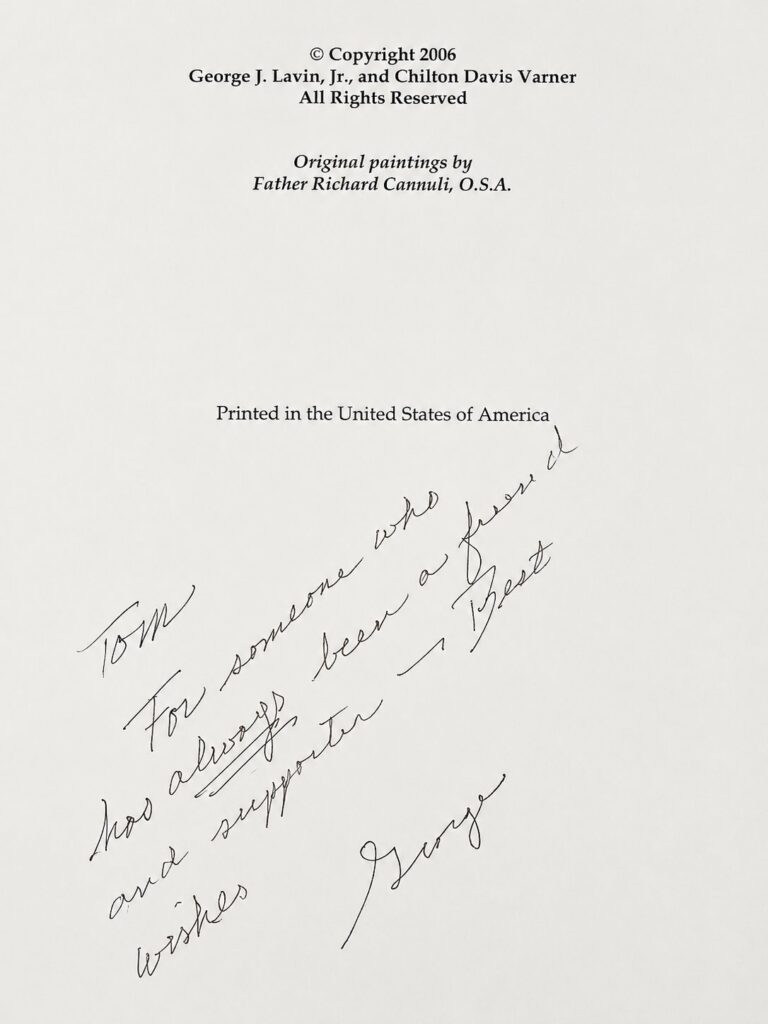
George Lavin personally inscribed this copy of Silent Advocacy to me. During the years he was writing the book, we had numerous conversations about trial strategy, witness preparation, courtroom professionalism, and the principles that ultimately became the foundation of Silent Advocacy. Those conversations continue to shape this series and explain why these lessons remain remarkably relevant for today’s trial lawyers, judges, law students, and litigation professionals.
Continue Exploring the Silent Advocacy Library
This article is part of the Silent Advocacy Library at Philly Legal News—an educational series exploring the timeless trial advocacy principles developed by George J. Lavin, Jr., Esquire, together with commentary and practical observations from Thomas G. Oakes based on decades of experience as a court reporter, courtroom technologist, educator, and litigation consultant.
Start here:
Silent Advocacy Library (Hub Page)
This cornerstone page provides the complete introduction to the series and
links to every Silent Advocacy article.
Explore the Silent Advocacy Library
Foundations
- Why Silent Advocacy? Why Bother?
- The Lavin Method – Trial Preparation
- The Lavin Method: Silent Advocacy as Legacy and Trial Strategy
Working with the Court
Preparing the Case
- The Ultimate Pre-Trial Checklist for Trial Lawyers
- Silent Advocacy Series: Lesson 2 – Should You Take a Civil Case to Trial?
- Taking the Expert’s Deposition
Inside the Courtroom
- Silent Advocacy in Action: The Battle of the Attorneys
- Silent Advocacy – Chapter VI
- Silent Advocacy – Chapter XI: Direct Examination
Additional Trial Advocacy Resources
- Trial & Deposition Technologies Resource Center
- Legal Education, Trial Technology & Professional Archive
The Silent Advocacy Library continues to grow. Future chapters will explore witness preparation, cross-examination, courtroom technology, jury persuasion, trial professionalism, and the enduring lessons of George J. Lavin, Jr., Esquire, together with practical observations from Thomas G. Oakes’ decades inside courtrooms throughout Philadelphia and beyond.
A Legacy Continued
Throughout my legal career, I had the unique opportunity to work closely with two extraordinary trial lawyers—George J. Lavin, Jr., Esquire and Edward A. Gray, Esquire. Although each had his own style, both believed that preparation, professionalism, credibility, and respect for the courtroom mattered far more than theatrics.
Those same principles were passed to my son, Thomas G. Oakes II, Esquire . Watching him develop as a trial lawyer, I have seen many of the lessons George Lavin and Ed Gray emphasized continue to shape his approach to preparing cases, working with clients, and presenting evidence.
Their influence extends beyond the pages of Silent Advocacy. Many of the principles they championed continue to shape the approach to trial preparation and courtroom advocacy at The Oakes Firm .
Frequently Asked Questions
What is Silent Advocacy?
Silent Advocacy is George J. Lavin Jr.’s philosophy of disciplined trial practice emphasizing preparation, professionalism, credibility, and respect for the judicial process rather than courtroom theatrics.
Why is direct examination so important?
Direct examination allows attorneys to present the facts through their own witnesses while building credibility with the jury. It is often where jurors begin deciding whom they trust.
What is the COIK Rule?
COIK stands for Clear Only If Known. The principle reminds lawyers that evidence has value only if jurors understand it.
How should attorneys prepare witnesses?
Preparation should include reviewing testimony, exhibits, prior statements, courtroom procedures, anticipated cross-examination, and ensuring witnesses can explain their testimony clearly using language jurors understand.
Why do these lessons still matter?
Although technology has changed, jurors continue to respond to preparation, honesty, organization, and professionalism. Those principles remain fundamental to effective trial advocacy.
About the Author — Thomas G. Oakes
Thomas G. Oakes is a 45+ year legal professional in Philadelphia and the founder/editor of PhillyLegalNews.com and PhillyLegalConnect.com. He served for many years as an official court reporter in the Philadelphia Court of Common Pleas and the U.S. District Court for the Eastern District of Pennsylvania, and has worked as a freelance court reporter in state and federal courts for decades.
In addition to courtroom work, Tom is a nationally recognized leader in trial technology. He has trained lawyers, judges, and law students in TrialDirector and courtroom presentation, taught in Temple University’s LL.M. in Trial Advocacy technology curriculum (with special recognition), and has lectured nationally and internationally for organizations including the FDCC and IADC. He also founded the FDCC “FedTech U” program and has instructed in the FDCC Deposition Boot Camp.
Award: Temple University LL.M. in Trial Advocacy — 2013 Faculty Award for “Art of Technology in the Courtroom.”
Tom, prior to his retirement, was the principal of Thomas G. Oakes Associates, a Philadelphia-based litigation-support and trial-technology firm serving attorneys nationwide for more than 33 years.
Disclaimer
This article is for general informational and educational purposes only and does not constitute legal advice. Reading this content does not create an attorney–client relationship. If you need legal advice about a specific situation, consult a qualified attorney in the appropriate jurisdiction.
About Philadelphia Legal News
Philadelphia Legal News is an educational publication dedicated to trial advocacy, legal technology, courtroom practice, and the history of the legal profession. Drawing on more than four decades of firsthand courtroom experience, Thomas G. Oakes shares practical insights, historical perspective, and commentary designed to benefit lawyers, judges, legal professionals, law students, and anyone interested in the evolution of the legal profession.