

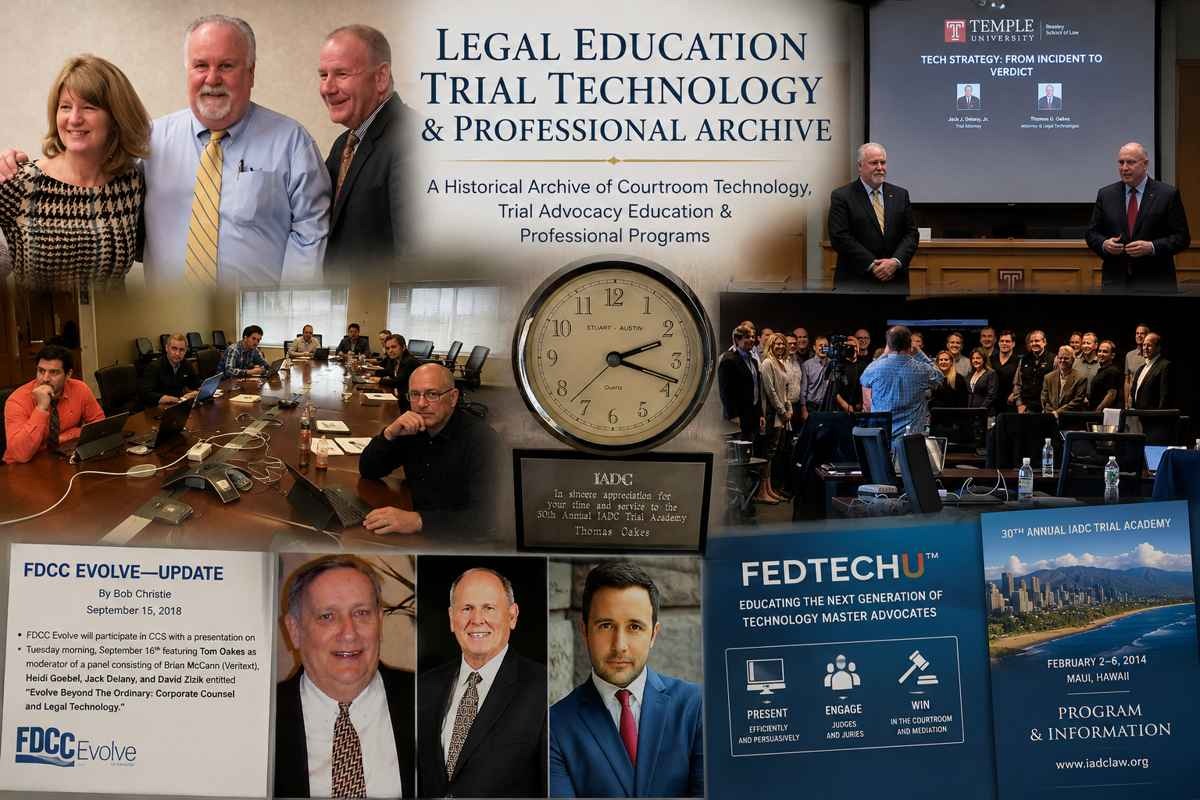
Historical archive preserving courtroom technology education, trial advocacy instruction, multimedia litigation systems, and the evolution of modern courtroom communication.
What Is This Legal Technology Archive?
This archive preserves historical materials, educational references, seminar programs, publications, and documented technology initiatives connected to the evolution of courtroom presentation technology, trial advocacy education, deposition workflows, and legal storytelling. The materials featured throughout this archive include references connected to legal organizations, bar associations, educational institutions, courtroom technology programs, trial advocacy seminars, judicial education initiatives, and professional legal conferences spanning more than a decade. These references include organizations and programs connected to the FDCC, IADC, Philadelphia Bar Association, Montgomery County Courts, Temple University Beasley School of Law LL.M. in Trial Advocacy program, courtroom technology seminars, TrialDirector educational demonstrations, and other national and regional legal education initiatives.
Editor’s Note
The materials, photographs, educational references, archived seminar brochures, letters, technology demonstrations, and professional programs featured throughout this archive reflect decades of collaboration with legal educators, trial lawyers, litigation support professionals, judges, bar associations, and national legal organizations during a period when courtroom technology was rapidly transforming modern litigation practice.
Many of these programs focused on helping attorneys, judges, and trial teams better communicate through synchronized video testimony, digital exhibits, multimedia litigation workflows, TrialDirector presentation systems, TrialPad technology, and evolving courtroom presentation techniques long before many of these technologies became standard in modern trial practice.
The archive includes historical references connected to organizations and educational initiatives involving Temple University Beasley School of Law’s LL.M. in Trial Advocacy program, the Federation of Defense & Corporate Counsel (FDCC), FDCC Evolve, FedTechU, the International Association of Defense Counsel (IADC), bar association technology seminars, litigation support training programs, deposition education initiatives, and courtroom technology workshops presented throughout the United States.
Over the years, many outstanding judges, professors, trial lawyers, litigation support professionals, legal educators, and courtroom technology pioneers contributed to the seminars, educational programs, teaching initiatives, and collaborative efforts referenced throughout this archive. While it would be impossible to mention every individual, organization, presentation, and professional relationship that helped shape this evolving field, these materials collectively reflect a broader professional community dedicated to improving advocacy, communication, legal education, and courtroom presentation through technology.
Many of the archived materials also connect to articles, third-party publications, educational letters, organizational newsletters, historical seminar programs, and professional references documenting the growing role of technology in modern litigation, trial advocacy, interactive depositions, and visual storytelling in the courtroom.
This archive is intended to preserve part of that professional history while providing educational context for lawyers, law students, litigation support professionals, legal educators, and others interested in the evolution of courtroom technology and modern advocacy systems.
— Thomas G. Oakes
Founder & Editor, PhillyLegalNews.com
Key Takeaways
- Historical continuity matters: These archived materials document years of courtroom technology education, trial presentation strategy, and litigation communication innovation.
- Third-party references strengthen authority: Many of the materials throughout this archive originate from independently published educational brochures, organizational newsletters, seminar programs, and professional legal publications.
- Technology and storytelling evolved together: The archive demonstrates how synchronized video testimony, digital exhibits, TrialDirector workflows, TrialPad systems, and multimedia advocacy transformed courtroom communication.
- Educational leadership became central to modern litigation: The archive reflects collaboration with judges, professors, trial lawyers, legal educators, litigation support professionals, and national legal organizations.
- The evolution from analog to digital advocacy is documented throughout the archive: These historical references capture the transition from paper exhibits and VHS playback to modern multimedia litigation workflows and technology-assisted advocacy systems.
This archive is part of the Philly Legal News Trial & Deposition Technologies Hub , an educational resource focused on courtroom presentation systems, interactive depositions, synchronized video testimony, multimedia litigation workflows, and the evolving role of technology in modern trial practice.
Many of the educational programs and courtroom communication concepts referenced throughout this archive also connect to broader themes explored in the Philly Legal News Silent Advocacy Hub , including visual persuasion, demonstrative storytelling, pacing, memory retention, and modern courtroom communication strategies.
Why This Archive Exists
This page is designed as a historical and documentary archive — not simply a résumé or promotional page.
Over the course of decades, courtroom technology evolved from overhead projectors, paper exhibits, and VHS deposition playback into sophisticated multimedia trial presentation systems involving synchronized video, digital exhibits, demonstratives, mobile presentation technology, cloud-based workflows, and AI-assisted litigation support.
The materials preserved throughout this archive help document that evolution.
Many of the educational references included below involve:
Courtroom Presentation & Litigation Technology
- Elmo presentation system📝 Don’t Overlook the Elmo: The Mighty Miniature Every Trial Tech Needs
- TrialDirector presentation software
- TrialPad presentation app
- TrialLine – Timeline software
- Digital courtroom presentation
- Technology-assisted litigation workflows
Deposition, Video & Remote Communication Platforms
- Video depositions
- Zoom remote communications
- Google Meet legal collaboration
- Jury communication strategies
- Visual storytelling concept
View archived litigation technology and remote communication conference room demonstration
AI-Assisted Litigation Support & Note-Taking Technologies
- Otter AI note-taking workflows
- Fireflies AI meeting transcription
- AI-assisted litigation support
- Cloud-based legal collaboration
- Technology-assisted communication systems
Legal Education & Professional Programs
- FDCC Evolve technology initiatives
- FDCC FedTechU litigation technology training
- IADC technology initiatives
- Trial advocacy education
- Temple LL.M. teaching programs
- Technology seminars and workshops
The goal of this archive is to preserve historically relevant educational materials and demonstrate how courtroom technology and legal communication evolved over time.
Professional Organizations, Educational Programs & Technology Leadership
National & Regional Legal Education Initiatives
Many of the archived materials throughout this collection involve legal education initiatives, courtroom technology programs, trial advocacy instruction, and professional seminars connected to national and regional legal organizations, law schools, bar associations, and litigation education programs.
The archived materials connected to FDCC Evolve demonstrate how litigation professionals, educators, technologists, and trial lawyers collaborated to modernize courtroom communication, synchronized video workflows, and technology training during a transformative period in modern litigation practice.
Several organizational references throughout this archive discuss collaborative educational initiatives involving trial lawyers, legal educators, courtroom technology professionals, litigation support specialists, and multimedia advocacy instructors.
These historical educational materials collectively reflect:
- Courtroom technology education
- Trial presentation strategy
- Litigation storytelling instruction
- Demonstrative evidence workshops
- Video deposition training
- Technology-assisted advocacy
- Judicial and bar association educational programs
- Continuing legal education initiatives
- Technology modernization discussions
These educational efforts focused on helping legal professionals adapt to rapidly changing courtroom technologies, evolving communication expectations, and increasingly multimedia-focused trial environments.
FDCC Evolve, TechU & Litigation Technology Education
The archived FDCC Evolve references preserved throughout this archive document an important period in the evolution of litigation technology education and courtroom communication strategy. These educational initiatives included technology seminars, presentation workshops, multimedia advocacy instruction, and collaborative litigation technology programs involving trial lawyers, educators, litigation support professionals, and courtroom technology trainers from across the country.
Historical materials throughout this archive include references connected to FDCC Evolve, FedTechU, synchronized video presentation systems, demonstrative evidence education, and evolving courtroom communication methodologies used during trial preparation and live courtroom presentation.
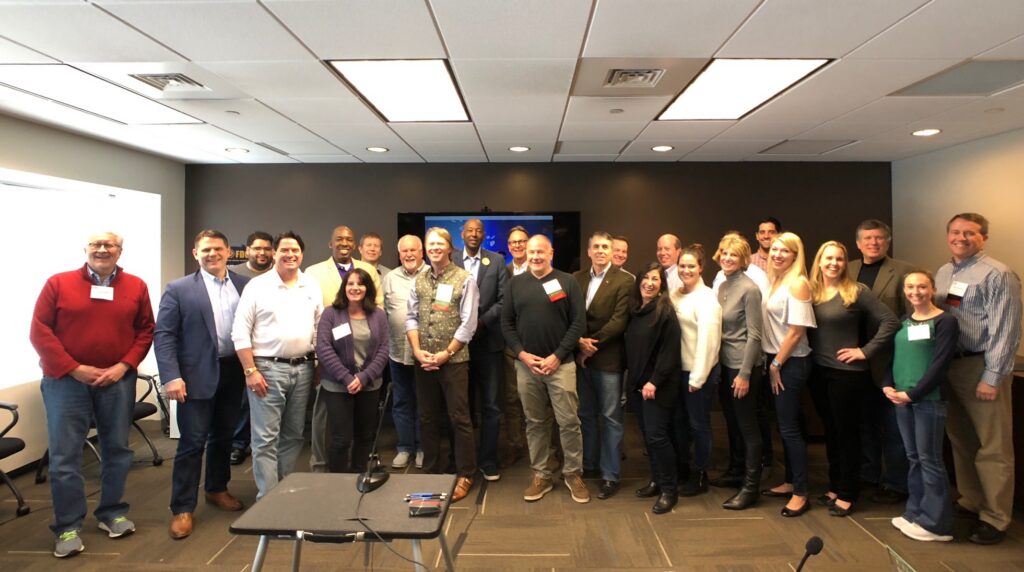
These collaborative educational initiatives helped introduce litigators, educators, and litigation support professionals to evolving courtroom technologies, synchronized video workflows, multimedia presentation systems, and modern trial communication methodologies during a significant period of transition within the legal profession.
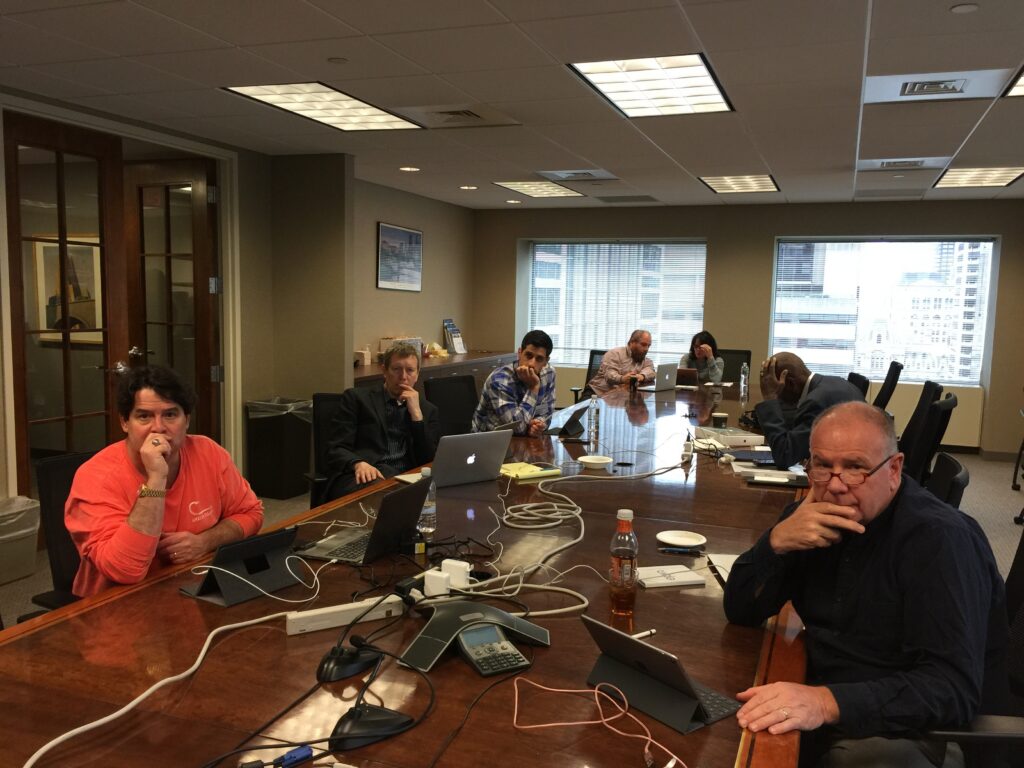
Many of these educational sessions focused on practical courtroom communication workflows, including synchronized video testimony, digital exhibit presentation, multimedia advocacy strategy, and technology-assisted trial preparation techniques used in modern litigation practice.
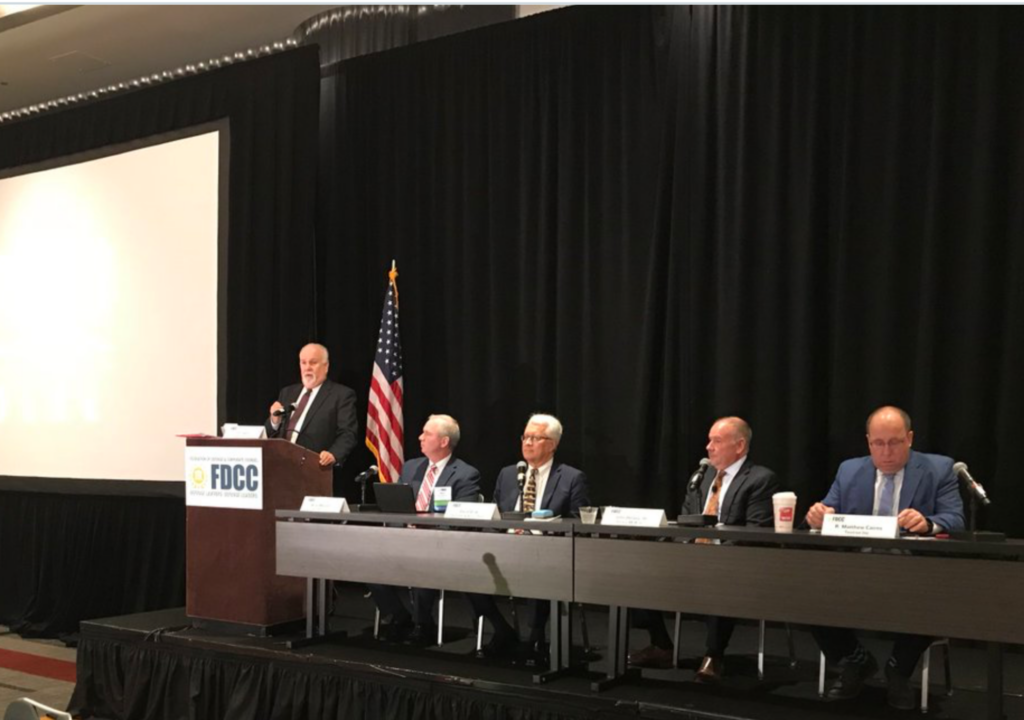
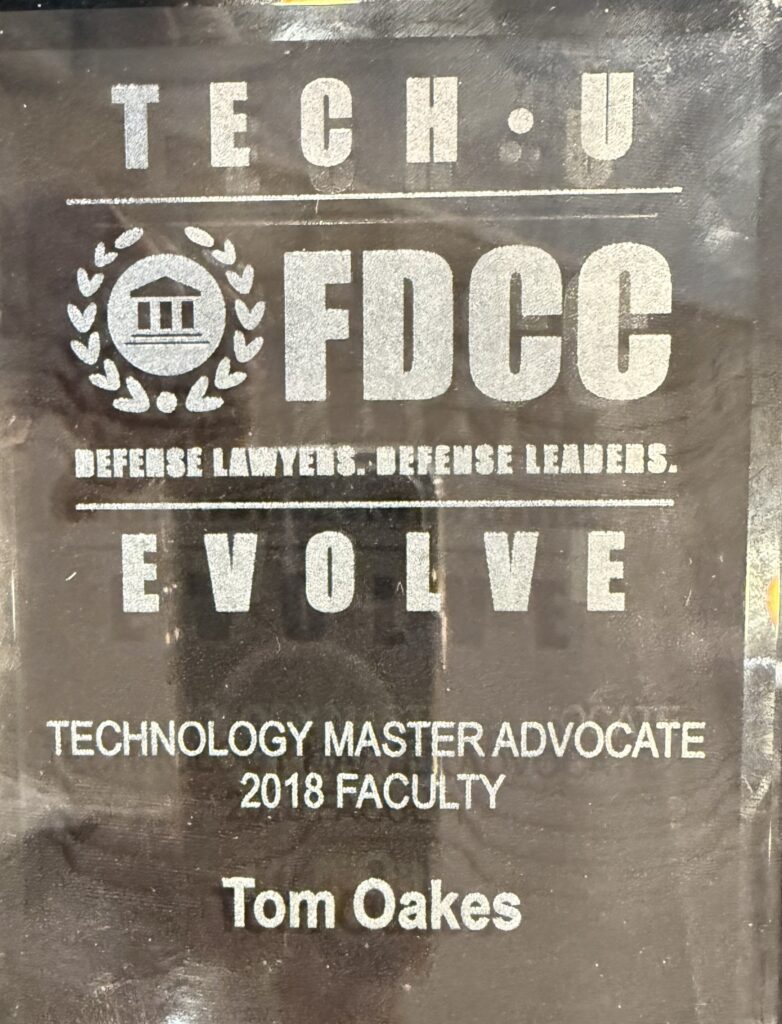
This FDCC Evolve TechU faculty recognition reflects years of involvement in courtroom technology education, synchronized video presentation training, multimedia advocacy instruction, and collaborative litigation technology initiatives involving trial lawyers, legal educators, and litigation support professionals from across the country. Many of these educational programs focused on evolving courtroom presentation systems and litigation technologies including TrialDirector, TrialPad, TrialLine timeline software, synchronized video deposition workflows, digital exhibit presentation systems, remote communication platforms, and multimedia trial advocacy methodologies used in modern litigation practice.
TechU & Trial Technology Education
Technology Instruction & Courtroom Presentation Training
Technology-focused litigation education became increasingly important as courts transitioned toward multimedia presentation systems, digital evidence handling, synchronized deposition playback, and mobile trial presentation tools.
Historical references connected to TechU initiatives demonstrate the growing emphasis on practical technology training for litigators, legal educators, litigation support professionals, and courtroom presentation teams.
Several archived references throughout this collection discuss evolving courtroom technologies and litigation workflows involving TrialDirector presentation software, TrialPad systems, TrialLine timeline technology, digital exhibit presentation, synchronized video depositions, multimedia storytelling techniques, interactive demonstratives, and modern courtroom communication methodologies.
Educational references preserved throughout this archive also discuss:
- TrialDirector presentation software
- TrialPad presentation systems
- TrialLine timeline technology
- digital exhibit workflows
- synchronized video depositions
- visual persuasion techniques
- interactive courtroom technology
- mobile presentation systems
- iPad-based litigation workflows
- jury attention and communication strategies
TrialDirector, Video Depositions & Multimedia Advocacy
The Early Evolution of Digital Trial Presentation
One of the strongest recurring themes throughout the archived materials preserved in this collection is the evolution of TrialDirector software, synchronized video depositions, multimedia presentation systems, and technology-assisted courtroom communication methodologies used in modern litigation practice.
Many of the courtroom technology concepts, synchronized video workflows, multimedia advocacy systems, and litigation presentation methodologies discussed throughout this archive are explored in greater detail throughout the Philly Legal News Trial & Deposition Technologies Hub , an educational resource focused on courtroom communication, interactive depositions, multimedia presentation systems, and evolving litigation technology strategies.
Educational papers, archived seminar materials, courtroom technology workshops, and litigation training programs referenced throughout this archive discuss evolving presentation systems involving:
- synchronized deposition playback
- dynamic video callouts
- digital exhibit presentation
- visual storytelling methodologies
- presentation pacing strategies
- multimedia advocacy systems
- juror attention and communication concepts
- interactive demonstratives
- PowerPoint integration
- TrialDirector presentation workflows
- TrialPad and iPad-based courtroom presentation systems
- TrialLine timeline technology
- synchronized video
- multimedia storytelling
- demonstratives pacing
- jury communication
- PowerPoint integration
- iPad workflows presentation
- psychology
Many of these educational discussions appeared as early as 2012, long before multimedia litigation workflows and technology-assisted courtroom presentation systems became widely adopted throughout the legal profession.
The historical significance of these archived materials is important because they help document how courtroom communication evolved alongside changing juror expectations, advancing digital presentation systems, synchronized video testimony, and increasingly multimedia-focused trial environments.
Modern courtroom presentation strategies increasingly evolved beyond simply displaying documents on a screen. Educational discussions throughout these archived materials emphasized blending technologies together through synchronized video testimony, PowerPoint integration, digital exhibits, animations, photographs, timeline systems, demonstrative evidence, and multimedia storytelling techniques designed to improve juror comprehension, pacing, emotional retention, and overall courtroom communication effectiveness.
Temple University LL.M. in Trial Advocacy
Teaching Trial Technology & Courtroom Communication
The Temple University Beasley School of Law LL.M. in Trial Advocacy program has long been recognized for practical courtroom instruction and advanced trial advocacy education. Built around a “learn by doing” philosophy, the program combines litigation strategy, depositions, expert testimony, jury dynamics, courtroom technology, and live performance exercises designed to translate theory into courtroom performance.
→ Learn more about Temple University’s LL.M. in Trial Advocacy curriculum
Technology instruction connected to courtroom communication, presentation strategy, demonstratives, and litigation storytelling became an important part of modern trial advocacy training.
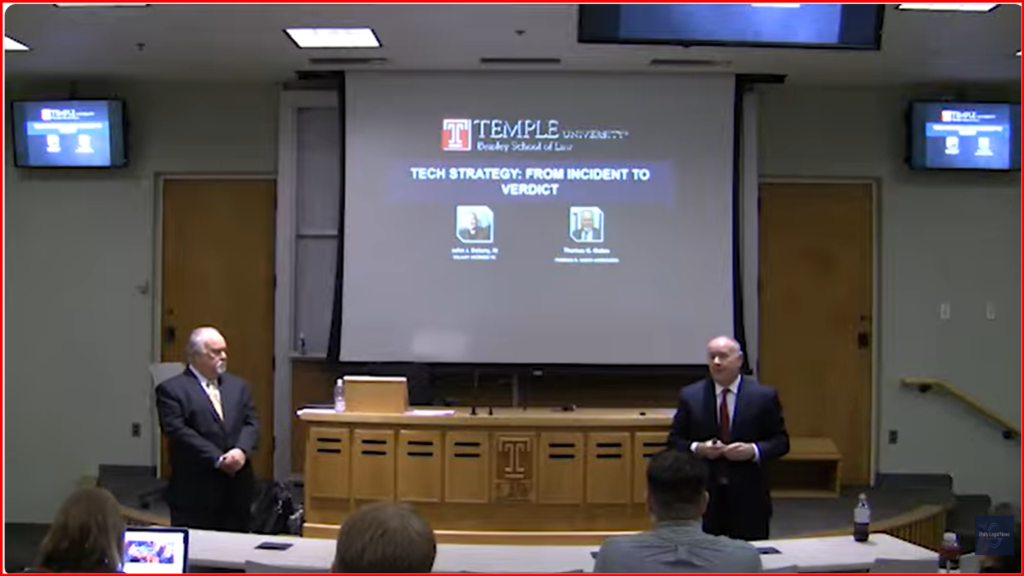

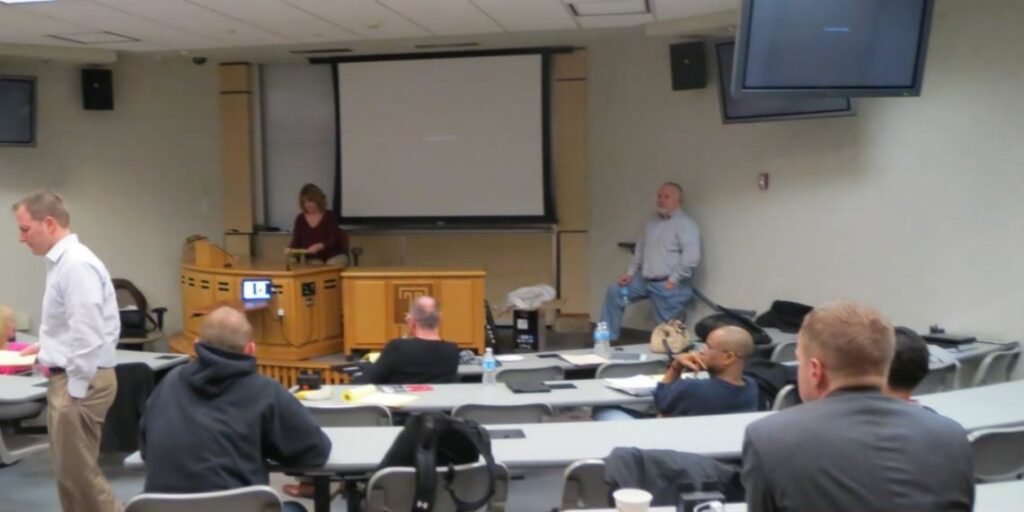
Over the years, the Temple University Beasley School of Law LL.M. in Trial Advocacy program benefited from the participation of numerous faculty members, trial lawyers, litigation support professionals, and technology instructors committed to helping students develop practical courtroom skills.
While attending law school and continuing into his years as a practicing attorney, Thomas G. Oakes II, Esquire, MBA, regularly assisted with the Temple LL.M. Trial Technology Boot Camps and related instructional programs. As a Certified TrialDirector Trainer, he provided hands-on technology demonstrations, practical courtroom presentation instruction, and real-world insights into the use of litigation technology during trial preparation, depositions, and courtroom presentations.
These collaborative instructional sessions allowed students to work directly with the presentation technologies and communication systems increasingly used in modern litigation while gaining practical experience from professionals actively involved in courtroom advocacy and trial presentation.
Many of these Temple University LL.M. in Trial Advocacy instructional sessions focused on practical courtroom communication strategy, multimedia advocacy systems, demonstrative evidence workflows, synchronized video presentation methodologies, and evolving litigation technology practices used in modern trial preparation and courtroom presentation.
Archived references connected to Temple include:
- courtroom technology instruction
- trial presentation education
- litigation storytelling concepts
- practical trial advocacy training
- demonstrative presentation strategy
- video deposition workflows
- presentation psychology
- faculty collaboration
- educational seminars
Related Technology & Educational Resources
Additional educational articles discussing courtroom technology, synchronized video depositions, TrialDirector workflows, TrialPad presentation systems, generational juror communication strategies, and multimedia advocacy are available throughout the PhillyLegalNews Technology & Depositions archive.
→ View the Trial & Deposition Technologies Hub
Silent Advocacy & Jury Communication
Technology, Memory & Courtroom Storytelling
Another recurring theme throughout many of the archived materials is the relationship between technology, persuasion, storytelling, pacing, and jury attention.
These concepts eventually evolved into broader discussions involving Silent Advocacy, visual hierarchy, pacing and emphasis, demonstrative storytelling, cognitive retention, jury memory, visual communication strategy, non-verbal persuasion, and synchronized multimedia presentation.
The archived references help demonstrate how courtroom technology was never simply about software. It was ultimately about communication.
The strongest trial technology systems were the ones that improved clarity, comprehension, timing, storytelling, emotional pacing, and information retention.
These concepts remain highly relevant today as legal professionals continue adapting to increasingly visual forms of advocacy, courtroom communication, and trial presentation.
Related Silent Advocacy & Courtroom Communication Resources
Many of these communication concepts later evolved into broader discussions involving Silent Advocacy, courtroom psychology, juror communication strategy, mentorship, demonstrative storytelling, and the human side of trial presentation.
- Silent Advocacy Trial Law Hub
- The 13th Juror: Practicing Silent Advocacy
- The Lavin Method & Silent Advocacy
- The Lavin Method: Trial Preparation & Silent Advocacy
- Generational Juror Communication Strategies
- Blending Trial Technology & Juror Communication
- Before the First Case: How Mentorship Shapes a Trial Lawyer
- You Can’t Put the Water Back: A Lesson on Reputation
- Court Officials: The Forgotten Key to Silent Advocacy
- Silent Advocacy in Action
Notable Educational Programs, Judicial Presentations & Professional Collaborations
Throughout the years, courtroom technology and litigation education presentations were delivered in connection with judicial education programs, bar association initiatives, national legal organizations, law schools, and professional legal conferences throughout Pennsylvania and across the United States.
Many of these educational programs focused on courtroom communication, demonstrative evidence, trial presentation strategy, multimedia advocacy, synchronized video testimony, litigation storytelling, and evolving technology-assisted advocacy techniques.
Pennsylvania Judicial & Court Education Programs
Additional courtroom technology and litigation education presentations included programs connected to the Philadelphia Court of Common Pleas, Pennsylvania judicial education conferences, and regional courtroom communication initiatives involving nationally recognized trial lawyers, judges, legal educators, and litigation support professionals.
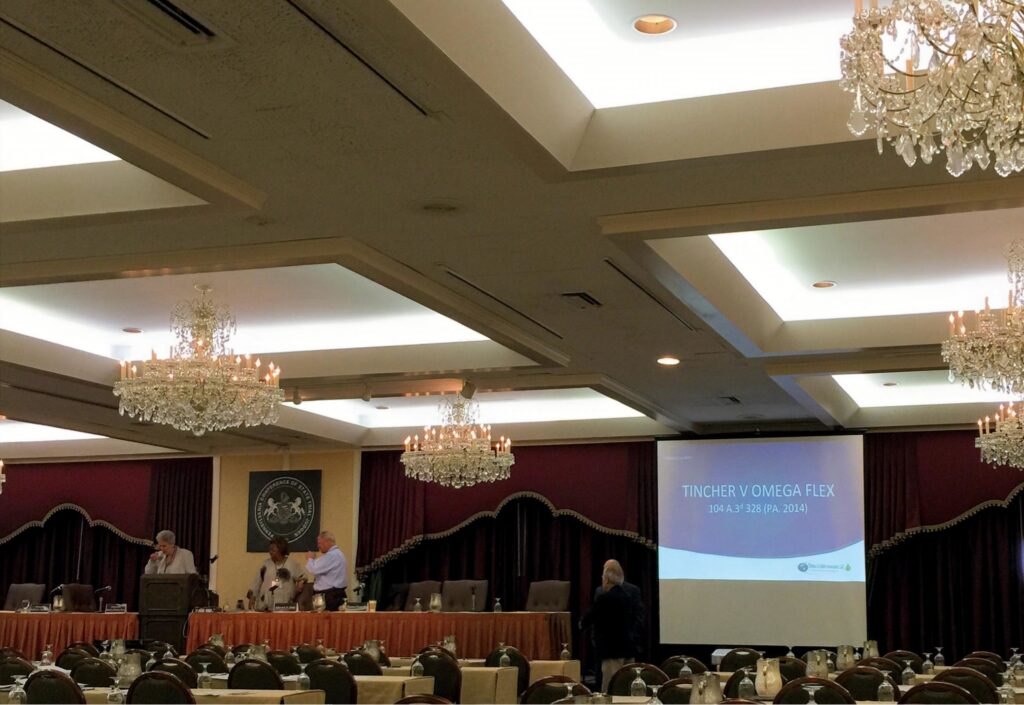
One significant educational presentation involved Edward A. Gray, Esquire and discussions relating to Tincher-related litigation concepts, courtroom presentation strategy, demonstrative evidence communication, and evolving litigation workflows used in complex trial practice.
Additional educational programs were delivered to Pennsylvania judges in Hershey, Pennsylvania and included presentations involving Edward A. Gray, Esquire, Larry Coben, Esquire, and other courtroom communication professionals discussing demonstrative evidence, litigation storytelling, courtroom technology, and technology-assisted advocacy methodologies.
National Educational Programs & Professional Collaborations
Educational initiatives preserved throughout this archive also include programs connected to the International Association of Defense Counsel (IADC), FDCC educational initiatives, ABA-related conferences, Legal Intelligencer programs, and national litigation technology seminars presented throughout the United States.
These collaborative programs involved discussions concerning multimedia advocacy, synchronized video testimony, digital exhibits, demonstrative storytelling, jury communication strategies, visual persuasion, presentation psychology, and courtroom communication techniques.

Professional collaborations and educational presentations throughout the years involved many respected trial lawyers, legal educators, litigation consultants, judges, and courtroom communication professionals, including Professor Barbara Ashcroft, Jack Delany, Esquire, Larry Bendesky, Esquire, William J. Ricci, Esquire, David Kwass, Esquire, Joseph E. O’Neil, Esquire, Mary Wells, Esquire, Kyle Dryer, Esquire, Chilton Varner, Esquire, Stu Simon, Edward A. Gray, Esquire, Larry Coben, Esquire, George J. Lavin, Jr., Esquire, and many others who contributed to the advancement of courtroom communication, legal education, litigation technology, and modern trial advocacy.
Educational Program Recognition
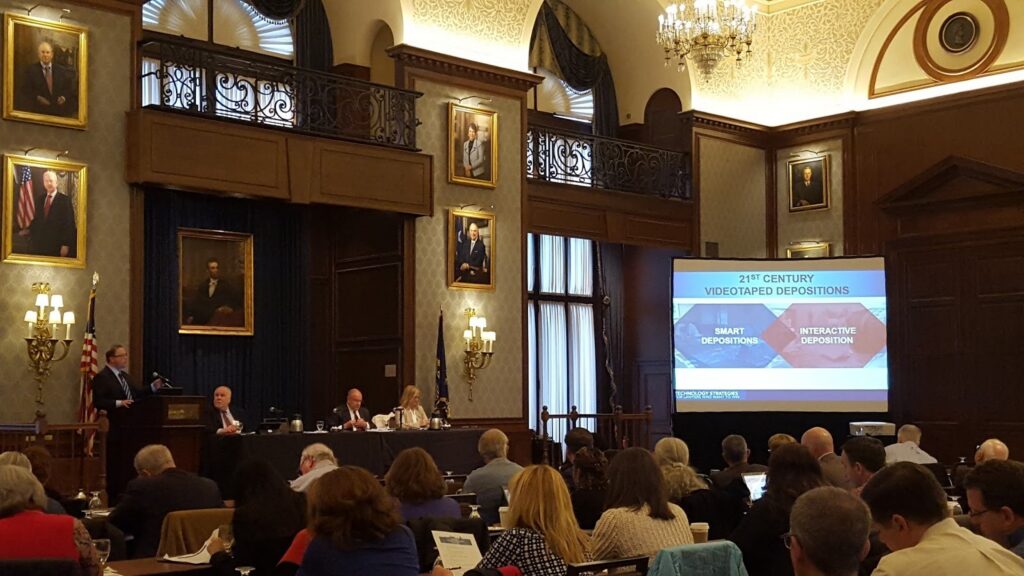
Following The Legal Intelligencer Litigation Summit at Philadelphia’s Union League, attendee evaluations identified the program as the highest-rated session of the conference. According to feedback compiled by ALM, the presentation received the highest overall ratings of the day.
Attendees highlighted the practical nature of the program and specifically referenced:
• “Live clips”
• “Practical and persuasive”
• “Particularly enjoyed session one”
• “Examples”
• “Panel and examples were great”
• “Videos”
Among the attendee comments was a reference to the “Tom Oakes experience,“ highlighting the value participants placed on practical demonstrations, real-world courtroom technology examples, and hands-on educational instruction.
The panel included Larry Bendesky, Esquire; Jack Delany, Esquire; Professor Barbara Lynn Ashcroft, Esquire; and Thomas G. Oakes.
One Philadelphia-based educational program held at the Union League of Philadelphia focused on litigation technology, courtroom communication, and evolving advocacy techniques. Additional Legal Intelligencer educational presentations conducted at the Sofitel Hotel in Philadelphia addressed courtroom presentation systems, legal technology education, litigation communication strategies, and demonstrative evidence workflows.
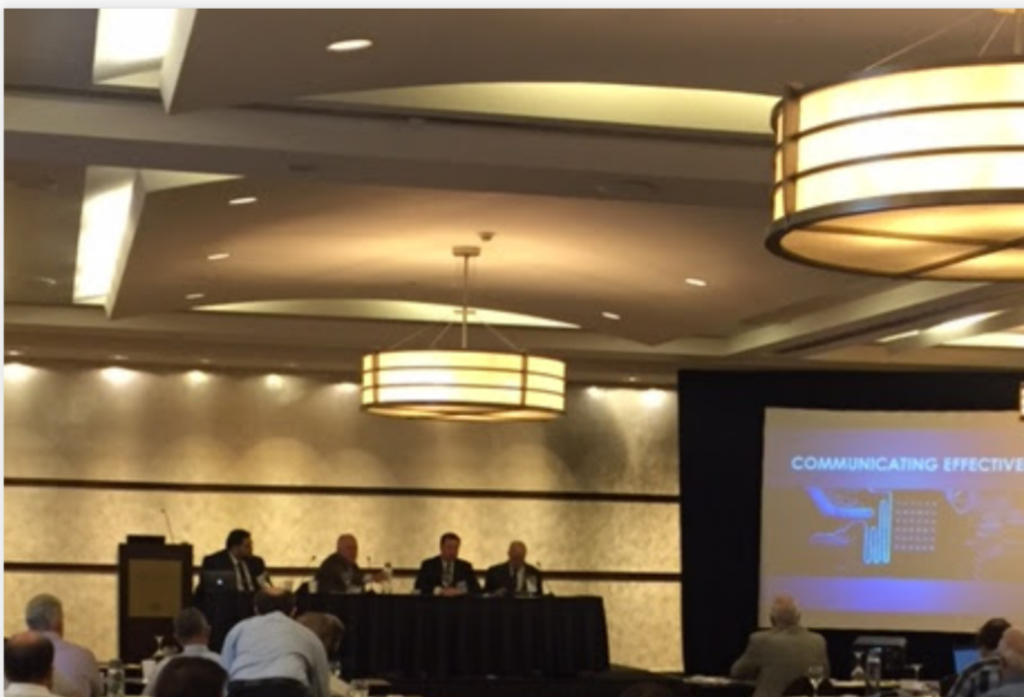
These educational programs collectively reflect the broader evolution of courtroom communication and advocacy as the legal profession transitioned from traditional presentation methods to increasingly multimedia-focused and technology-assisted trial environments.
Frequently Asked Questions
What is included in the courtroom technology archive?
This archive includes educational materials, seminar programs, legal technology references, trial advocacy initiatives, courtroom communication resources, historical brochures, archived photographs, and litigation technology materials connected to the evolution of modern trial practice.
What organizations are referenced throughout the archive?
The archive includes references connected to organizations such as the FDCC, FDCC Evolve, FedTechU, IADC, Temple University Beasley School of Law, bar associations, judicial education programs, and litigation technology seminars throughout the United States.
Why is courtroom technology important in modern litigation?
Courtroom technology improves communication through synchronized video testimony, digital exhibits, multimedia storytelling, demonstrative evidence systems, and interactive presentation workflows that help lawyers communicate more effectively with judges and juries.
What are TrialDirector and TrialPad?
TrialDirector and TrialPad are courtroom presentation platforms commonly used for synchronized video depositions, exhibit presentation, impeachment clips, digital storytelling, and multimedia litigation workflows in modern trial practice.
How did courtroom technology evolve before AI-assisted litigation systems?
Long before AI-assisted workflows became common, legal professionals were already adapting to digital exhibits, mobile presentation systems, synchronized video testimony, livestreaming concepts, multimedia storytelling, cybersecurity concerns, and evolving courtroom communication technologies.
About the Author — Thomas G. Oakes
Thomas G. Oakes is a 45+ year legal professional in Philadelphia and the founder/editor of PhillyLegalNews.com and PhillyLegalConnect.com. He served for many years as an official court reporter in the Philadelphia Court of Common Pleas and the U.S. District Court for the Eastern District of Pennsylvania, and has worked as a freelance court reporter in state and federal courts for decades.
He holds the highest national court reporter certifications through rigorous testing, including credentials from the National Court Reporters Association and multiple state associations, including Pennsylvania, New Jersey, Delaware, and Maryland. Tom was also the principal of Thomas G. Oakes Associates, a Philadelphia-based litigation support and trial technology firm serving attorneys nationwide for more than 33 years.
In addition to courtroom work, Tom is a nationally recognized leader in trial technology and a Certified TrialDirector Trainer. He has trained lawyers, judges, law clerks, paralegals, and trial teams in courtroom presentation and technology, and taught in Temple University’s LL.M. in Trial Advocacy program (with special recognition).
He has lectured at bar associations throughout Pennsylvania and nationally for organizations including the Federation of Defense and Corporate Counsel (FDCC), the International Association of Defense Counsel (IADC), and the American Bar Association (ABA). He is also a co-founder of the FDCC Evolve program and an instructor in the FDCC Deposition Boot Camp.
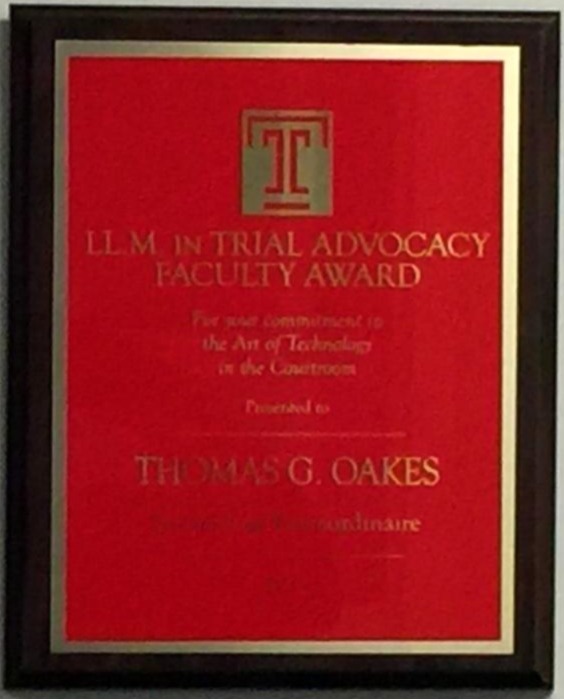
Award: Temple University LL.M. in Trial Advocacy — 2013 Faculty Award for “Art of Technology in the Courtroom.”
Disclaimer
This article is for general informational and educational purposes only and does not constitute legal advice. Reading this content does not create an attorney–client relationship. If you need legal advice about a specific situation, consult a qualified attorney in the appropriate jurisdiction.