


By Thomas G. Oakes, RPR, CSR, RMR, RDR
Whether you’re in a state or federal case, the written record is everything. As I emphasized during the Federation of Defense & Corporate Counsel (FDCC)’s Deposition Boot Camp, attorneys create the record—court reporters preserve it. This post blends real-world courtroom experience with practical guidance to help lawyers ensure clean, accurate transcripts that support their advocacy, protect appellate rights, and reinforce their case strategy.
Laying the Groundwork: Jurisdiction, Stipulations & Strategy
Before you ask your first question, understand the legal framework. Is the deposition being conducted under state or federal rules? Is it a discovery deposition or a de bene esse trial deposition?
Most depositions begin with the “usual stipulations,” such as:
“Signing, sealing, certification, and filing are waived. All objections, except as to the form of the question, are reserved until the time of trial.”
These stipulations matter. So does your witness type—fact, corporate, or expert. For corporate and expert witnesses, confirm the home or business address and clearly establish their capacity on the record. If you are deposing or defending a corporate or expert witness, you will likely want that witness to read and sign the deposition.
The court reporter will coordinate with counsel regarding where the transcript should be sent—either directly to the witness or to the attorney representing the party the witness supports. Note: Some state courts do not allow a full 30 days for signature and errata return. Federal Rules are uniform across all 50 states, but state deadlines vary, so be aware of your jurisdiction.
Witnesses instructed to review and sign should receive a formal letter explaining how to complete the errata sheet, sign the transcript, and return the completed documents. All counsel of record receive a copy of this instruction letter. Once the signed deposition is returned, the court reporter will distribute any errata and the signature page to all parties.
Handling Exhibits Efficiently
Premarking exhibits can save time and avoid confusion. And remember: while counsel creates the record, the court reporter preserves it.
There are many approaches to exhibits:
- Pre-labeled stickers only: I’ve been in depositions where I prepared multiple sheets of exhibit labels ahead of time—sometimes as many as a 100—without attaching them to specific documents. Counsel would apply the stickers during the deposition.
- True premarking: In other cases, I’ve worked with attorneys to affix exhibit stickers directly to the documents a half hour before the deposition began. This is true premarking and helps keep things organized.
- On-the-fly marking: Some depositions are more fluid, with exhibits being marked as the questioning progresses. While this works, it can lead to confusion or misnumbering if not managed carefully.
Exhibit Naming Conventions That Work
As a matter of organization, it’s best to mark exhibits using a consistent naming convention—typically the witness’s last name, exhibit number, and date. If you’re working with multiple witnesses who share a last name, include a first name or initial to differentiate.
Example:
- Smith-1 (07/01/2025)
- JSmith-2 (07/02/2025)
This small step makes document organization significantly easier, especially when preparing for trial or compiling post-deposition summaries.
The Oath & the Errata Sheet
The oath is not a formality to rush through—make sure you clarify whether the witness will swear or affirm, and do so on the record.
The errata sheet process—reading and signing—must be managed carefully. Errors in handling the errata can result in transcript disputes or rejection of changes at trial.
Before starting, provide your court reporter with:
- The deposition caption
- Your business card
- Any delivery preferences (PDF, Realtime, printed copy, etc.)
- Notice of any expedited needs or unusual formatting
Creating a Clean Record: The Lawyer’s Role
Court reporters are impartial officers of the court. But the record they produce is only as accurate as what is spoken and captured.
Special note:
The deposition record lives on long after the testimony ends. It may be used in future cases to impeach a witness if their statements or opinions change over time.
So be intentional. Make sure everything that matters is said clearly, on the record, and preserved accurately.
✅ Before the First Question:
- Confirm layout—make sure the reporter can hear all parties.
- Introduce yourself and other participants clearly.
- Alert the reporter to specialized terminology or exhibit-heavy proceedings.
- Mark and premark exhibits properly.
🎤 After the First Question:
- Speak clearly and at a well-modulated pace.
- Avoid side comments like “uh-huh,” “okay,” or “I see.” Use “yes” or “no.”
- Don’t gesture—it’s not recorded.
- Spell out names, addresses, and numbers clearly.
- Let witnesses finish speaking before interjecting.
- Pause between objections and responses to ensure clarity.
The reporter doesn’t record what you meant—only what was said.
Realtime Technology: Live Insight Into Your Transcript
Realtime court reporting delivers live transcription directly to your laptop. You can:
- Tag key issues as the deposition progresses.
- Use “Quick Marks” for critical testimony.
- View and annotate while your expert is still testifying.
To enable this:
- Request a Realtime-capable reporter.
- Ensure you have the right connection (high-speed internet or local wireless).
- Anticipate firewall issues if remote.
Ask your firm for a rough draft the same day for overnight review—an invaluable tool in multi-day depositions or complex cases.
Nonverbal Communication in Videotaped Depositions
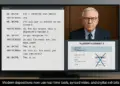
In video depositions, everything is captured—voice tone, gestures, body language, and facial expression.
- Avoid confusing gestures or ambiguous body language.
- Insert key exhibits into the video in real time if possible.
- Use technology to synchronize transcript and video for courtroom playback with scrolling text.
Remember: Lady Justice may be blind, but the jury watching your video isn’t.
Your Final Transcript Checklist
Before the Deposition:
- 📧 Send notice and caption to the court reporter.
- 🗂 Indicate delivery method, format, and preferred skill level.
- 📹 Confirm tech needs: video, Realtime, remote access, etc.
During the Deposition:
- 🎙 State stipulations clearly.
- 📍 Introduce all parties and witnesses.
- 📝 Mark and identify exhibits vocally.
- 🔇 Avoid filler language or vague objections.
After the Deposition:
- ✅ Confirm transcript delivery and who is ordering what.
- 📞 Respond promptly if the reporter needs clarification.
- 👓 Review and sign errata sheets as required.
Conclusion: You Make the Record
A bad record hurts your case. A clear and precise record protects it. Whether you’re prepping for mediation or preserving an appeal, remember: If it’s not in the record, it didn’t happen. You control that.
Court reporters are here to support the process—but it starts with you.
About the Author
Thomas G. Oakes, RPR, CSR, RMR, RDR is a nationally recognized litigation technology expert and former official court reporter for both the United States District Court for the Eastern District of Pennsylvania and the Philadelphia Court of Common Pleas. He has presented for the FDCC, IADC, ABA, and law schools across the country on deposition practice, trial presentation, and Realtime reporting.
📘 Disclaimer
The content of this blog is intended for informational and educational purposes only and does not constitute legal advice. Reading this blog does not create an attorney-client or reporter-client relationship. Readers should consult with their own legal counsel or certified reporting professionals for advice regarding any specific legal or procedural questions. The views expressed are those of the author and do not necessarily reflect the views of any organization or court.