

Key Takeaways
- Temple’s LL.M. in Trial Advocacy adopted a “learn by doing” model that integrated technology directly into trial performance.
- Trial technology evolved from a novelty into a core advocacy skill.
- Faculty leadership and practitioner-led instruction exposed students to real courtroom workflows.
- Hands-on training with TrialDirector and TrialPad reshaped how evidence is presented to juries.
- These methods continue to influence modern trial practice today.
Answer Block
Philadelphia trial work is increasingly technology-driven, and Temple’s LL.M. program helped set the standard for how modern advocates present evidence in court.
Q: Why does trial technology matter to jurors?
A: It helps jurors follow themes and retain complex information by pairing spoken advocacy with clear visuals.
Q: What does “on-the-fly” presentation mean?
A: Seamless, uninterrupted navigation through documents, photos, and video clips during live examination.
Philadelphia trials increasingly depend on disciplined trial-technology workflows, and Temple’s LL.M. program helped train advocates to meet that reality.
Trial advocacy before technology became central
For many years, trial advocacy education focused primarily on oral persuasion and paper exhibits. While effective advocates have always relied on storytelling, courtroom realities changed as evidence became increasingly digital and juror expectations evolved.
Jurors accustomed to visual information began to expect more than spoken descriptions. Courts increasingly relied on electronic records, digital exhibits, and video testimony. Trial advocacy education had to adapt.
Modern jurors process and retain complex information far more effectively when oral advocacy is reinforced with visuals. Studies commonly referenced in trial-communication research, including the Weiss-McGrath retention framework, demonstrate that combining spoken testimony with visual presentation dramatically improves juror recall. For a fuller breakdown of these findings and their implications for modern trial practice, please see the following: Generational Juror Communication Strategies.
Temple University’s LL.M. in Trial Advocacy recognized this shift early and began integrating technology into advocacy training—not as an accessory, but as a core skill.
Temple’s “learn by doing” philosophy
The cornerstone of Temple’s LL.M. in Trial Advocacy program is its performance-based approach. Students do not simply study trial theory; they practice it. Litigation strategy, case theory, and advocacy skills are taught through hands-on performance, trial simulations, and presentations before judges and juries.
According to Temple’s official curriculum, the program integrates litigation strategy with trial practice across multiple core areas and emphasizes that students “learn by doing,” applying proven techniques during trial performances rather than learning them in isolation.
Temple’s LL.M. in Trial Advocacy curriculum (linked) – https://law.temple.edu/academics/degrees/llm-trial-advocacy/curriculum/
This philosophy naturally extended to trial technology.
Why technology became integral to jury persuasion
Temple’s curriculum explains that technology has “fast become an integral component to jury persuasion.” While many trial lawyers accept technology at some level, effective use requires understanding how jurors process information.
Modern jurors often retain complex information more effectively when they both hear and see it. Visual timelines, synchronized testimony, and structured exhibits help jurors follow complex facts and recurring case themes.
Effective trial advocacy today depends on blending oral persuasion with visual presentation. When jurors can both hear and see the evidence, comprehension improves and key themes are reinforced throughout the case. This approach—central to modern trial technology training—is explored further in this analysis of how visual advocacy supports juror understanding. See the following: Blending Trial Technologies.
Temple’s LL.M. program reflects this reality by teaching technology as a communication tool—not a distraction—and by emphasizing visual clarity alongside verbal advocacy. Temple’s LL.M. in Trial Advocacy curriculum (linked) https://law.temple.edu/academics/degrees/llm-trial-advocacy/curriculum/
Faculty leadership and high-technology trial instruction
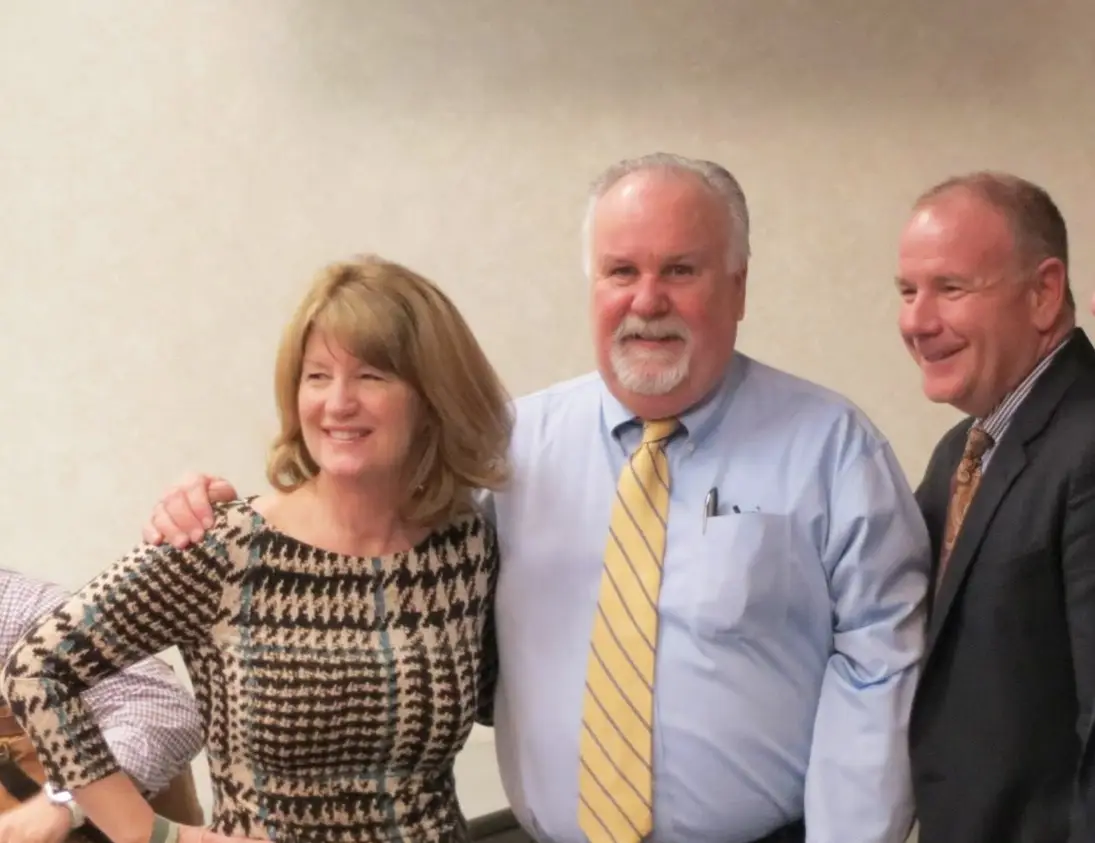
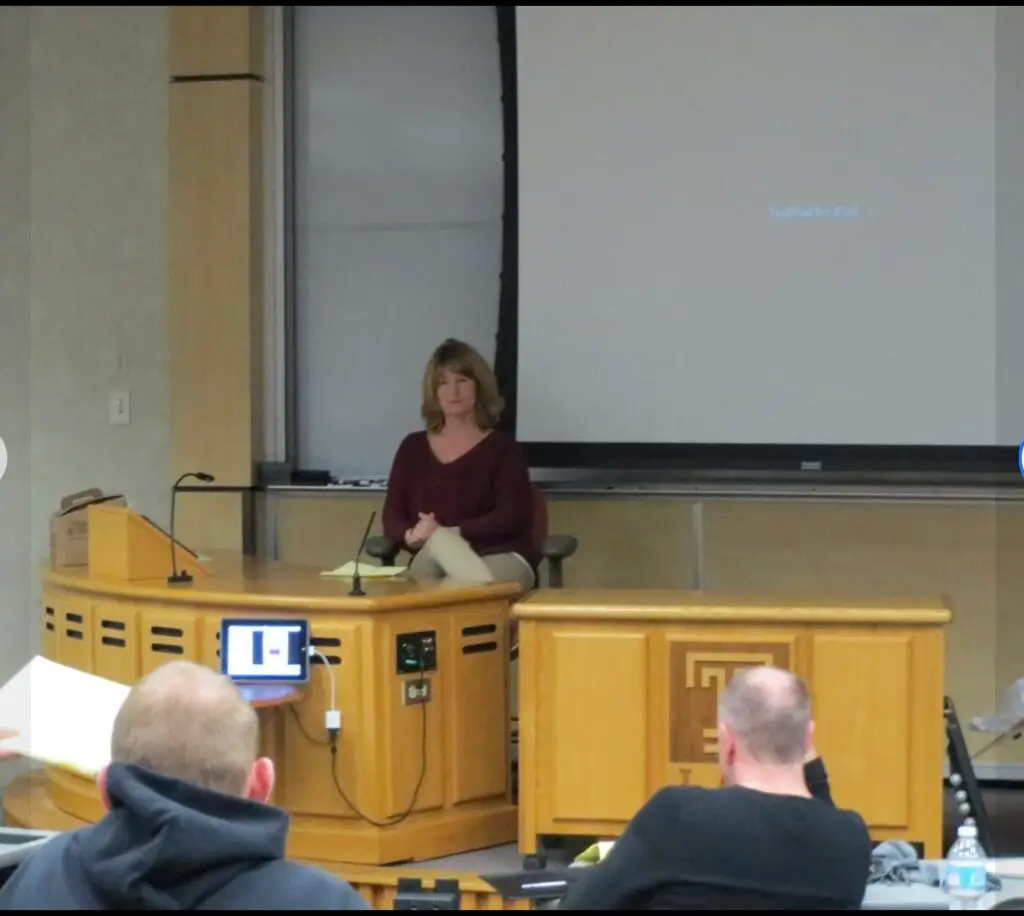
During the period when trial technology became fully integrated into the LL.M. program, it was led by Professor Barbara Lynne Ashcroft, Esquire, who served as Director of the LL.M. in Trial Advocacy. As Director, she oversaw curriculum development, faculty coordination, and student training, ensuring that advocacy instruction reflected real courtroom demands.
High-technology trial instruction also included lectures and demonstrations alongside Jack Delany, Esquire, a distinguished trial lawyer and member of the Federation of Defense & Corporate Counsel (FDCC). These sessions focused on how experienced trial lawyers integrate technology into case theory, witness examination, and jury persuasion in high-stakes litigation.
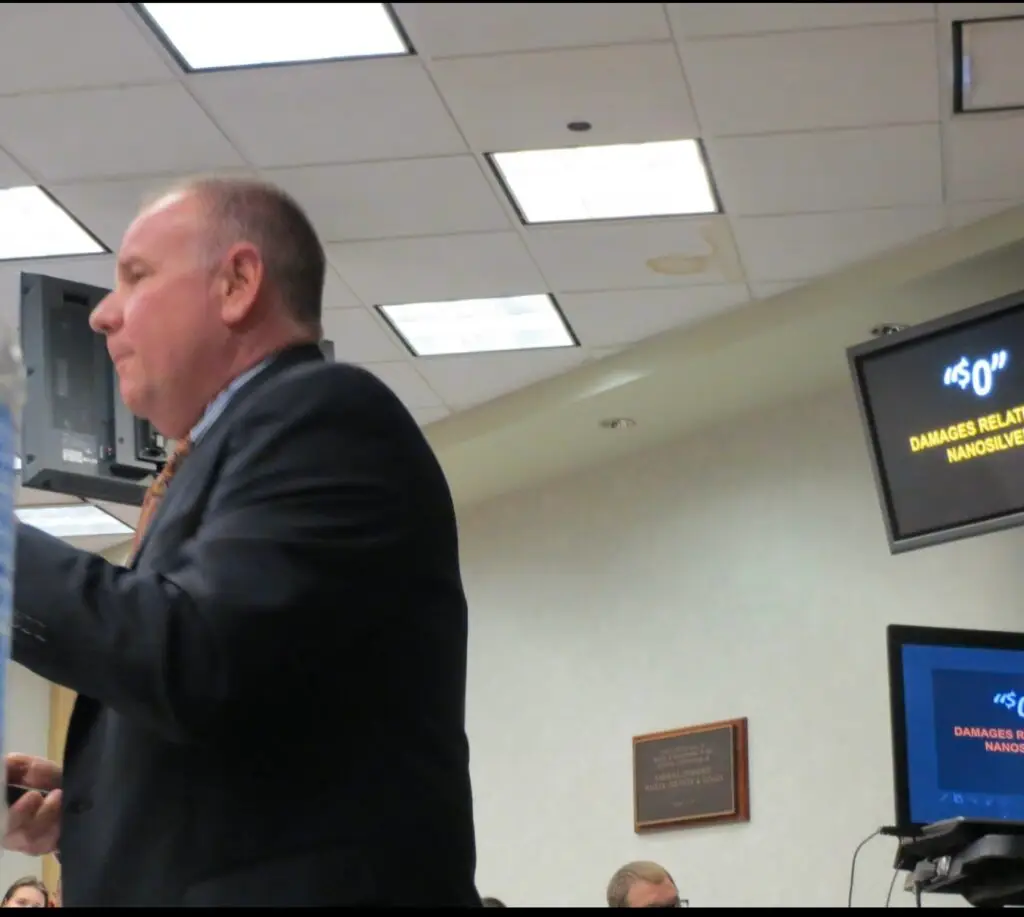
This collaborative teaching model ensured that students were exposed to both institutional leadership and real-world trial practice.
Trial technology instruction at Temple
Temple’s curriculum states that students receive hands-on instruction using TrialDirector, a leading software platform for document organization and the presentation of photographs, video, and testimony. The program provides access to multiple experts, including Temple Law’s IT department, jury consultants, and TrialDirector specialist Thomas G. Oakes.
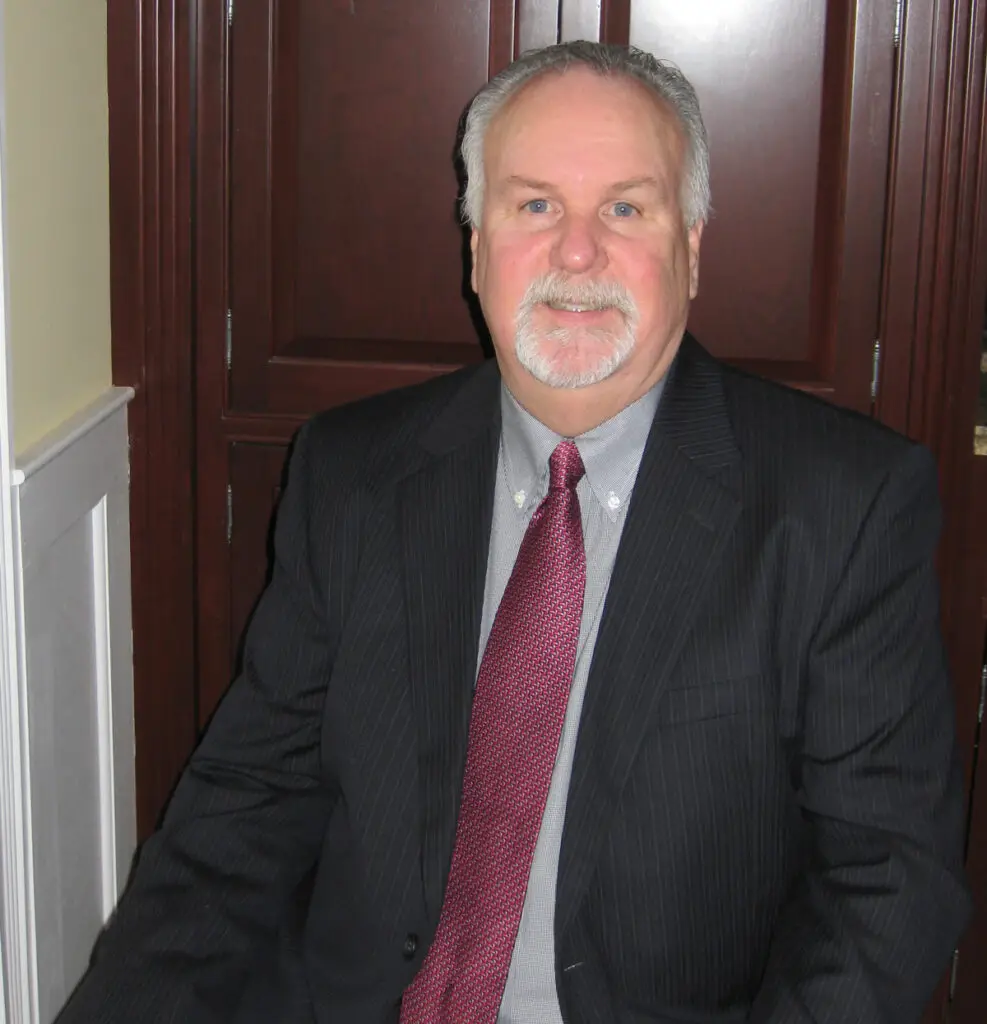
Students are taught to implement systematic case organization and to create technology-based exhibits aligned with case themes—from preparation through trial presentation.
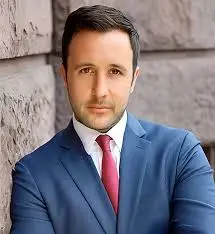
Hands-on instruction with Thomas G. Oakes II, Esquire, MBA
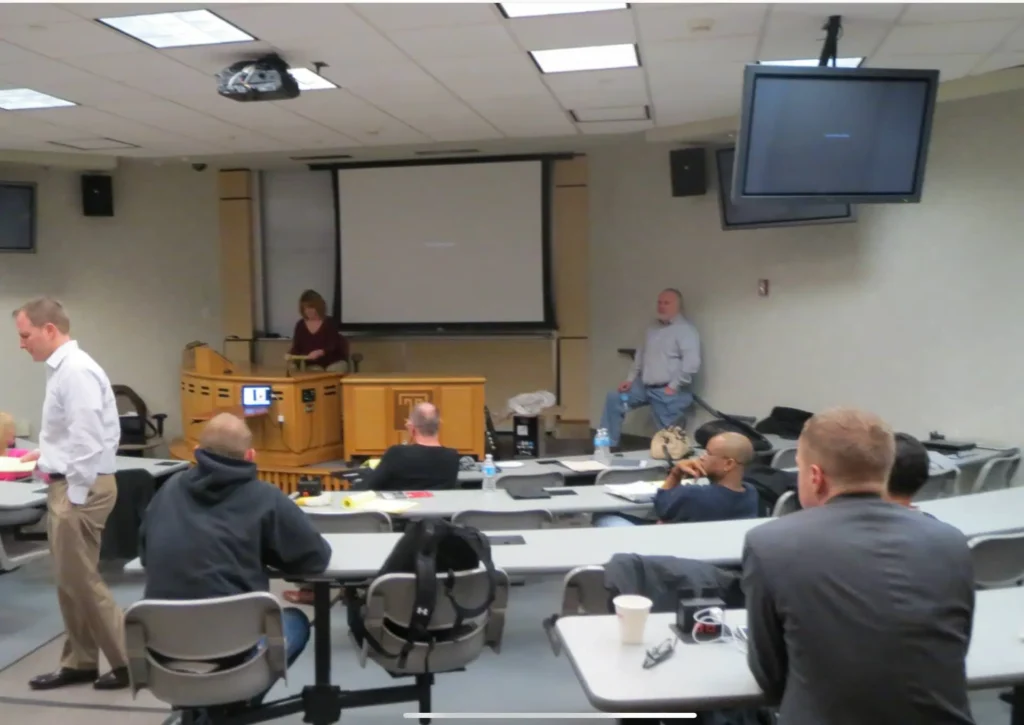
Within this instructional framework, Thomas G. Oakes II, Esquire, MBA worked directly with LL.M. students on the practical use of TrialDirector and TrialPad, focusing on real courtroom workflows used in trial practice.
He taught students how to build and organize case databases and how to prepare exhibits using markups, highlights, annotations, callouts, and snapshots. He also explained two distinct presentation styles: pre-treated presentations, prepared in advance for a planned and polished delivery, and on-the-fly presentations, which allow seamless, uninterrupted movement through documents, photographs, and video clips during live examination.
He further demonstrated how video deposition clips are created, synchronized, and strategically used—not only during witness examinations, but also in opening statements and closing arguments. In addition to group instruction, he worked one-on-one with many students to help refine individual workflows and troubleshoot real-time presentation challenges.
This hands-on approach reinforced Temple’s emphasis on preparing students for the realities of modern trial practice.
Integrating litigation strategy and technology
Technology instruction at Temple did not exist in isolation. The LL.M. curriculum integrates litigation strategy with trial performance, exposing students to proven techniques through lecture, demonstration, and reenactment of landmark cases.
Students are coached on how to incorporate these strategies—including technology-based presentation—into their own trial performances. This integration reinforces a central lesson: technology is most effective when it supports advocacy strategy rather than competing with it.
A generational impact on trial practice
The result of this approach was a generation of trial lawyers trained to view technology as an essential advocacy skill. Graduates learned to organize evidence more effectively, present complex information clearly, and communicate persuasively with juries in modern courtrooms.
Those lessons continue to influence trial practice today, shaping how cases are prepared and presented across jurisdictions.
Conclusion
The evolution of trial technology instruction at Temple’s LL.M. in Trial Advocacy reflects a broader transformation in the legal profession. As courtrooms continue to change, the principles emphasized by the program—preparation, clarity, and disciplined use of technology—remain central to effective advocacy.
Teaching trial technology was never about software alone. It was about training lawyers to present evidence clearly, ethically, and persuasively to the people tasked with deciding cases.
For a plain-English guide to what happens after an injury in Philadelphia, visit the Philadelphia Injury Playbook on PhillyLegalConnect.
Related: Thomas G. Oakes II, Esquire, MBA (bio).
If you need legal help after any injury, you can also review The Oakes Firm’s practice areas .
Frequently Asked Questions
What is “trial technology” in a courtroom setting?
Trial technology is the organized use of software and visuals to present documents, photos, video, and testimony clearly in court—without breaking the flow of advocacy.
Why does Temple’s LL.M. in Trial Advocacy emphasize trial technology?
Because modern jurors often understand and retain complex information better when they can both hear and see key evidence—especially when themes and timelines are reinforced visually.
What is TrialDirector used for in trial practice?
TrialDirector is commonly used to organize case materials and present exhibits, photos, video, and testimony in a structured way during openings, witness examinations, and closings.
What is the difference between “pre-treated” and “on-the-fly” presentation?
Pre-treated presentation involves preparing key documents and exhibits in advance for a polished, planned flow. On-the-fly presentation is the ability to move seamlessly and uninterrupted through documents, photographs, and video clips in real time during live examination.
How are video deposition clips created and used at trial?
Video clips are typically selected, synchronized, and organized so they can be played precisely at key moments—often during witness examinations, and sometimes strategically in openings and closings to reinforce major themes.
How does Temple’s “learn by doing” model translate to real trials?
It trains lawyers to build reliable workflows under pressure—systematic case organization, clean exhibit presentation, and disciplined use of visuals—so courtroom presentation stays clear, efficient, and persuasive.
For a plain-English guide to what happens after an injury in Philadelphia, visit the Philadelphia Injury Playbook on PhillyLegalConnect.
Related: Thomas G. Oakes II, Esquire, MBA (bio).
If you need legal help after any injury, you can also review The Oakes Firm’s practice areas .
<About the Author — Thomas G. Oakes
Thomas G. Oakes is a 45+ year legal professional in Philadelphia and the founder/editor of PhillyLegalNews.com and PhillyLegalConnect.com. He served for many years as an official court reporter in the Philadelphia Court of Common Pleas and the U.S. District Court for the Eastern District of Pennsylvania, and has worked as a freelance court reporter in state and federal courts for decades.
In addition to courtroom work, Tom is a nationally recognized leader in trial technology. He has trained lawyers, judges, and law students in TrialDirector and courtroom presentation, taught in Temple University’s LL.M. in Trial Advocacy technology curriculum (with special recognition), and has lectured nationally and internationally for organizations including the FDCC and IADC. He also founded the FDCC “FedTech U” program and has instructed in the FDCC Deposition Boot Camp.
Award: Temple University LL.M. in Trial Advocacy — 2013 Faculty Award for “Art of Technology in the Courtroom.”
Tom, prior to his retirement, was the principal of Thomas G. Oakes Associates, a Philadelphia-based litigation-support and trial-technology firm serving attorneys nationwide for more than 33 years.
Disclaimer
This article is for general informational and educational purposes only and does not constitute legal advice. Reading this content does not create an attorney–client relationship. If you need legal advice about a specific situation, consult a qualified attorney in the appropriate jurisdiction.