


What Was the May 1986 Naturalization Ceremony at Independence Hall?
The naturalization ceremony Independence Hall Philadelphia held on May 14, 1986, marked a powerful civic moment in the birthplace of American democracy. On that spring day, new American citizens were sworn in at Independence Hall in a formal ceremony presided over by the Honorable Norma L. Shapiro of the United States District Court for the Eastern District of Pennsylvania.
Individuals from many countries, cultures, and backgrounds gathered in the historic Assembly Room — the very chamber where the Declaration of Independence and the United States Constitution were debated and drafted — to raise their right hands and take the Oath of Citizenship.
The ceremony represented the culmination of years of lawful immigration, patience, study, and commitment to the rule of law. For those taking the oath, it was not symbolic — it was the final step in becoming citizens of the United States of America.
On a spring day in May 1986, I sat in a place where American history wasn’t just remembered — it was felt.
That day, Independence Hall wasn’t simply a landmark for visitors. It was a living civic space. A room where people came to take the final step in becoming Americans — to raise their right hands and take the Oath of Citizenship.
I remember their faces as clearly as if it were yesterday: joy, pride, relief — and for many, tears. They had waited. They had done the work. They had come through the process the right way, step by step, for themselves and for their families.
And now, they were finally here.
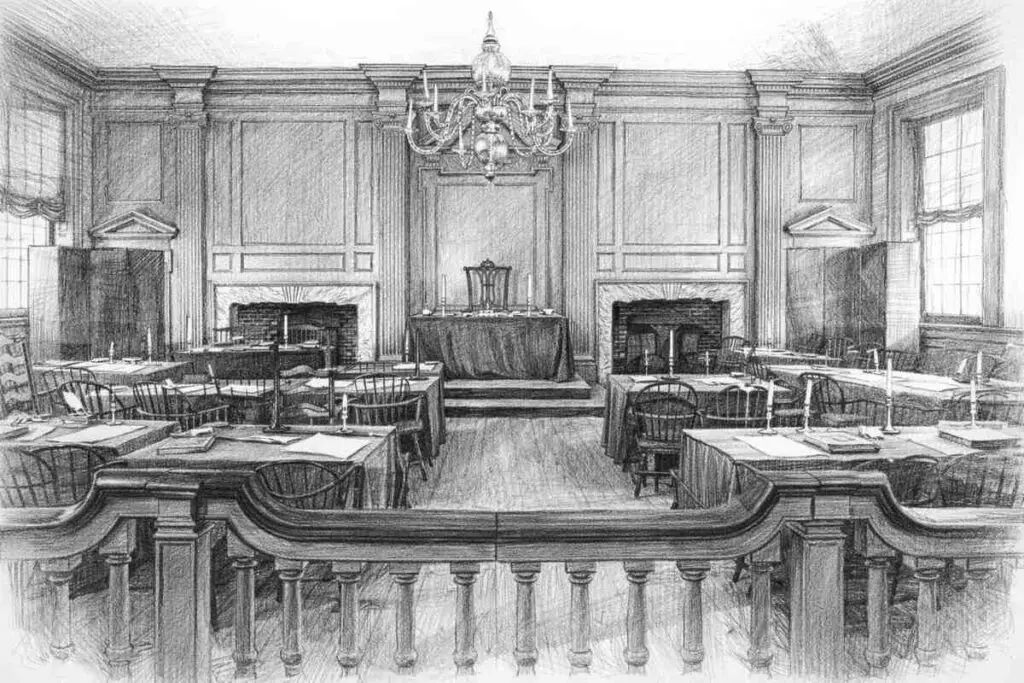
Learn more about Independence Hall and its historic Assembly Room at the National Park Service’s official Independence National Historical Park page.
The historic Assembly Room at Independence Hall
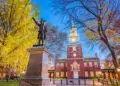
Independence Hall is a historic civic building in Philadelphia where the Declaration of Independence and the U.S. Constitution were debated and adopted. It began as Pennsylvania’s State House, completed in 1733, and over time became a symbol of liberty, democracy, and the founding of the United States. During the Revolutionary era, the Second Continental Congress convened there, and the Constitutional Convention met there in 1787 to debate, draft, and ultimately complete the Constitution.
By the late 20th century, the world recognized what that building represents: Independence Hall was designated a UNESCO World Heritage Site in 1979, in part because it is directly associated with ideas and events of universal significance — freedom, democratic government, and the rule of law.
My vantage point: the other side of the bar
What made the day unforgettable for me wasn’t only the history of the building — it was where I was sitting inside that room.
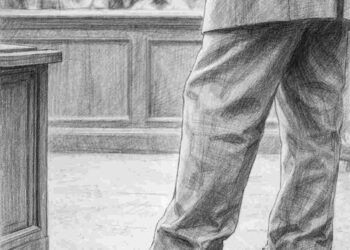
I was seated on the other side of the bar — and I mean “bar” in the way we understand it in a courtroom.
Just like a courtroom, there was a dividing line between the officials conducting the proceedings and the people who had come forward to seek something deeply serious and deeply meaningful. I was facing the people who had come to the bar of that historic setting to request that their citizenship be approved and granted.
And what struck me was how prepared they were.
They were asked questions — and every one of them, if called upon, would have answered. And answered correctly.
That matters. Because the knowledge they carried into that room wasn’t trivia. It was understanding — the basics of what this country is, what it stands for, and what the oath means.
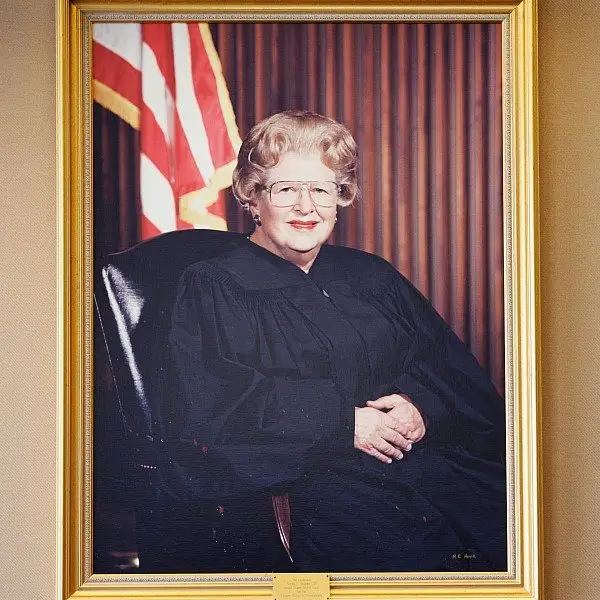
The ceremony was presided over by the Honorable Norma L. Shapiro of the United States District Court for the Eastern District of Pennsylvania, the federal trial court serving Philadelphia and the surrounding region.
Families filled the benches — pride you could see
The benches were filled with families — spouses, parents, children — watching in silence as their loved ones took that final step. There was a stillness in the room that you can’t manufacture. It wasn’t a performance. It was a promise.
When the Honorable Norma L. Shapiro, United States District Judge for the Eastern District of Pennsylvania, had them raise their hands to take the oath, you could feel the weight of the moment.
They were proud. They were grateful. They were ready.
Key Takeaways
- The May 14, 1986 naturalization ceremony at Independence Hall was presided over by Judge Norma L. Shapiro of the U.S. District Court for the Eastern District of Pennsylvania.
- The ceremony took place in the historic chamber where the foundations of the United States were debated and drafted.
- New citizens had spent years completing the lawful immigration process before taking the Oath of Citizenship.
- The oath represents a commitment to defend and uphold the Constitution and laws of the United States — regardless of political affiliation, religion, or background.
- The ceremony demonstrated the power of legal immigration, civic knowledge, and gratitude for American citizenship.
- The author witnessed the ceremony firsthand while serving as the assigned official court reporter to Judge Shapiro.
The oath means one country, one commitment
When people try that hard to become citizens — and then finally become citizens — they understand something in their bones:
The oath they’ve taken is an oath to defend and serve the United States of America.
Not a political party.
Not a movement.
Not a moment in the news cycle.
It is one country. One people. One United States of America.
People from many countries, many colors, many religions — all standing together, all swearing that they would comply with and follow the laws of the United States of America.
And that’s the part that stayed with me: the clarity of it.
Citizenship is a responsibility, not a slogan.
Don’t take citizenship for granted
That day taught me something simple and important:
Citizenship must not be taken for granted.
Our country lives by rules and laws. The people in that room had come through the process, done what was required, waited their turn, and earned their moment — not just for themselves, but for their children and their children’s children.
And you could see it in their faces: gratitude, pride, and determination.
It made me think about what we should be teaching — and re-teaching — to every American: the basics of who we are, what the Constitution is, what rights mean, what responsibilities mean, and why this country is called the land of the free and the home of the brave.
Not as a talking point — as real civic knowledge.
Because civic strength isn’t built on noise. It’s built on understanding.
The South Philly example I’ve seen my whole life
I’ve seen this story close to home, too.
I watched families in my South Philly neighborhood come to America from Italy and do so well. They worked hard, saved money, built businesses, raised kids, and once a family got settled, they sponsored and helped other family members — and even neighbors — find work and build a life here.
We embraced those families. They were hardworking and working for a purpose: to feed their families, to feel safe, to build a future, and to become citizens of the greatest country in the world — the United States of America.
Families like the Sena family of LaFamiglia — rooted in hard work and respect for the process — reflect the same values I later described in Court Officials: The Forgotten Key to Silent Advocacy.
Forty years later, I still remember their faces
Forty years later, I still remember that spring day.
I remember the pride. The tears. The families who filled the benches. The calm power of the oath being spoken aloud inside Independence Hall.
And I remember what it reminded me of:
This country gives enormous opportunity — but it asks something in return: commitment, responsibility, and respect for the rule of law.
That’s what those new citizens brought into that room.
And I was honored to witness it.
Frequently Asked Questions
When did the Independence Hall naturalization ceremony take place?
The ceremony described in this article took place on May 14, 1986, at Independence Hall in Philadelphia.
Who presided over the May 1986 naturalization ceremony?
The ceremony was presided over by the Honorable Norma L. Shapiro, United States District Judge for the Eastern District of Pennsylvania.
What happens during a naturalization ceremony?
During a naturalization ceremony, applicants who have completed the lawful immigration process raise their right hands and take the Oath of Allegiance to the United States. Upon completion, they officially become United States citizens.
Why was Independence Hall a meaningful location for the ceremony?
Independence Hall is the historic site where the Declaration of Independence and the U.S. Constitution were debated and adopted. Holding a citizenship ceremony there underscores the connection between constitutional principles and modern American citizenship.
Why is legal immigration and naturalization considered significant?
Legal immigration and the naturalization process require commitment, patience, and adherence to the rule of law. For many individuals and families, taking the Oath of Citizenship represents years of effort and a profound moment of pride and responsibility.
About the Author — Thomas G. Oakes
Thomas G. Oakes is a 45+ year legal professional in Philadelphia and the founder/editor of PhillyLegalNews.com and PhillyLegalConnect.com. He served for many years as an official court reporter in the Philadelphia Court of Common Pleas and the U.S. District Court for the Eastern District of Pennsylvania, and has worked as a freelance court reporter in state and federal courts for decades.
In addition to courtroom work, Tom is a nationally recognized leader in trial technology. He has trained lawyers, judges, and law students in TrialDirector and courtroom presentation, taught in Temple University’s LL.M. in Trial Advocacy technology curriculum (with special recognition), and has lectured nationally and internationally for organizations including the FDCC and IADC. He also founded the FDCC “FedTech U” program and has instructed in the FDCC Deposition Boot Camp.
Award: Temple University LL.M. in Trial Advocacy — 2013 Faculty Award for “Art of Technology in the Courtroom.”
Tom, prior to his retirement, was the principal of Thomas G. Oakes Associates, a Philadelphia-based litigation-support and trial-technology firm serving attorneys nationwide for more than 33 years.
Disclaimer
This article is for general informational and educational purposes only and does not constitute legal advice. Reading this content does not create an attorney–client relationship. If you need legal advice about a specific situation, consult a qualified attorney in the appropriate jurisdiction.
SS