


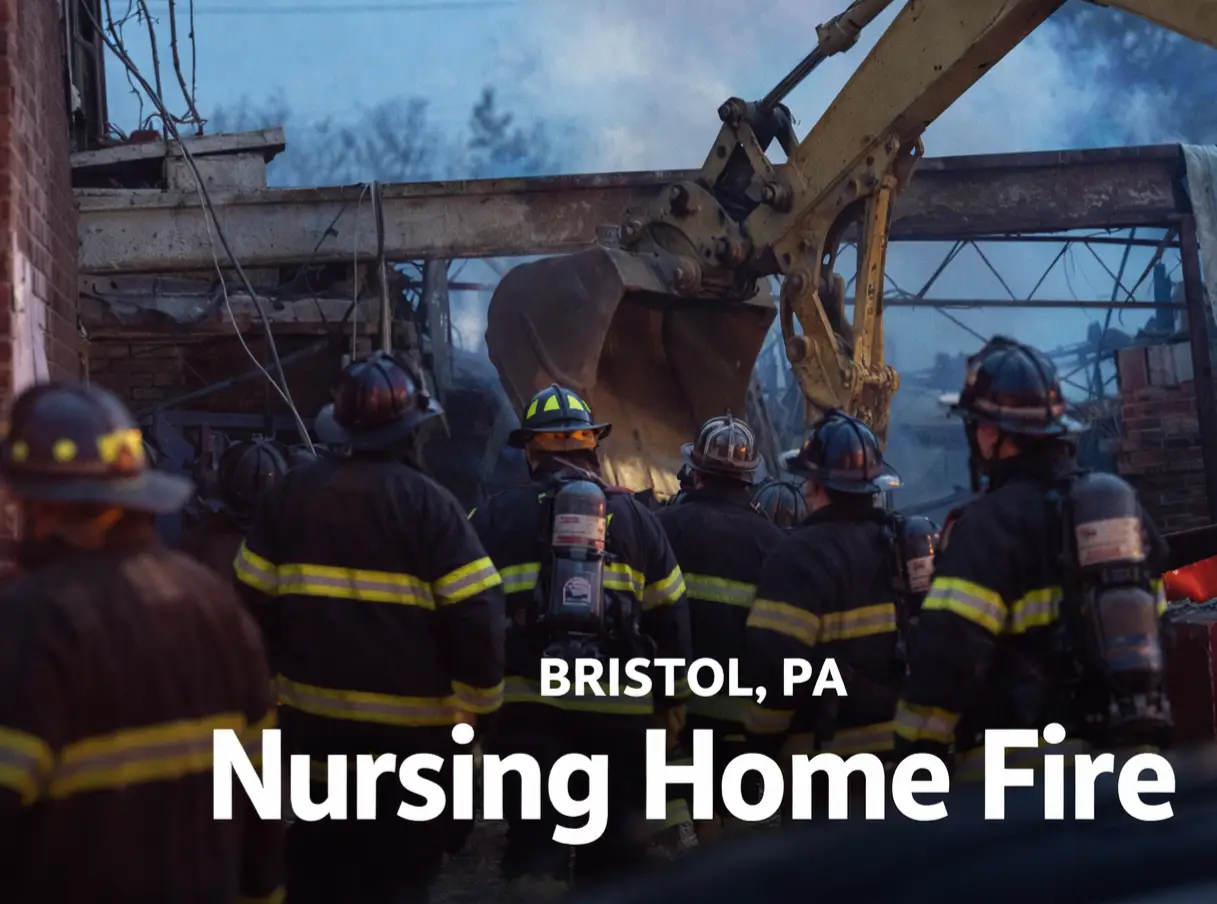
A deadly explosion and fire at a Bristol, Pennsylvania nursing home in late December 2025 exposed serious vulnerabilities in long-term care safety, emergency preparedness, and gas-leak response protocols. The Bristol PA nursing home explosion has prompted ongoing investigations and early lawsuits, and the tragedy highlights broader systemic risks faced by medically fragile residents while raising important questions about prevention, oversight, and accountability in nursing facilities.
Fires are uniquely terrifying events, particularly for those who experience them at a young age. When my mother was a child, her family lost their home in a house fire. She later told me it was one of the most frightening moments of her life — not only because of the immediate danger, but because they lost what little they had. That memory stayed with her, and it stayed with me. It is one of the reasons tragedies involving fire — especially in places meant to protect vulnerable people — deserve careful attention, reflection, and restraint.
— Thomas G. Oakes, Editor
Introduction
In the days leading up to Christmas 2025, a catastrophic explosion and fire at the Bristol Health & Rehab Center in Bristol Township, Bucks County, claimed multiple lives and injured numerous residents and staff members. It has been called the Bristol PA Nursing Home explosion. Beyond the immediate devastation, the incident has prompted multi-agency investigations and early civil lawsuits — and renewed attention on how such tragedies occur in facilities entrusted with the care of vulnerable populations.
This report examines what is known so far about the Bristol PA nursing home explosion, what investigators are examining, and what this event reveals about broader safety and oversight issues in long-term care settings.
What Investigators Are Examining in the Bristol PA nursing home explosion
Because of the fatalities and structural damage, multiple agencies launched parallel investigations. Reporting by 6abc Philadelphia and The Philadelphia Inquirer indicates the inquiry includes federal, state, and local activity, including scrutiny of gas-system conditions and response decisions. For ongoing related coverage on this site, see our News Updates & Technology page.
- Federal fire and safety investigators
- State utility and public-safety regulators
- Local fire marshals and emergency-management officials
A central focus is the natural gas system, including how reports of gas odors were handled, whether evacuation decisions were made or delayed, and what safety protocols were in place for a fully occupied nursing facility.
Related background reporting:
6abc (incident reporting):
https://6abc.com/post/2-dead-20-injured-explosion-pennsylvania-nursing-home/18309877/
Inquirer (initial reporting):
https://www.inquirer.com/news/pennsylvania/silver-lake-nursing-home-explosion-bucks-county-20251223.html
If you have additional verified information that should be considered for an update, you can reach us via the Contact page.
What This Tragedy Reveals
1. The Unique Risks of Nursing Home Emergencies
Nursing homes house residents with limited mobility and complex medical needs. When fires or explosions occur, evacuation becomes uniquely difficult and time-sensitive. The Bristol tragedy underscores how quickly conditions can become fatal in congregate-care environments.
2. The Importance of Early Hazard Response
According to WHYY and KYW Newsradio, gas odors were reported before the explosion. Whether those warnings were fully escalated — and what actions were taken — remains a central investigative issue.
WHYY: https://whyy.org/articles/bucks-county-nursing-home-explosion-3rd-victim-dies/
KYW Newsradio (lawsuit / gas-odor allegations): https://www.audacy.com/kywnewsradio/news/local/4-injured-bristol-nursing-home-explosion-claim-negligence-in-lawsuit
3. Oversight vs. Real-World Readiness
While nursing homes undergo inspections, tragedies like this raise broader questions about whether paper compliance translates into real-world emergency readiness — particularly when infrastructure, utilities, and staffing intersect.
Lawsuits and Legal Proceedings
In early January 2026, multiple civil lawsuits were filed by injured residents, staff members, and contractors. Reporting by WHYY, NBC10 Philadelphia, and Keystone Newsroom indicates that defendants include the facility’s operators and the regional gas utility.
WHYY (lawsuit / PECO coverage):
https://whyy.org/articles/bristol-explosion-nursing-home-lawsuit-peco/
NBC10 Philadelphia (second lawsuit):
https://www.nbcphiladelphia.com/news/local/lawsuit-filed-bristol-nursing-home-explosion-bucks-county-pennsylvania/4329422/
Keystone Newsroom (lawsuit coverage):
https://keystonenewsroom.com/2026/01/06/lawsuit-says-bucks-county-nursing-home-explosion-was-preventable/
The lawsuits allege failures involving gas-leak response, evacuation decisions, and safety practices. These cases remain in early stages, and allegations have not been proven. As the Bristol PA nursing home explosion investigation continues, the claims and defenses will be tested through documents, witness testimony, and expert analysis.
Key Takeaways
- The Bristol nursing home fire highlights systemic safety risks in long-term care facilities.
- Early hazard warnings are critical in preventing catastrophe.
- Emergency planning must account for residents with limited mobility.
- Investigations and lawsuits are ongoing, with broader policy implications.
Frequently Asked Questions
Was the Bristol Health & Rehab Center explosion confirmed to be caused by natural gas?
Investigators and early reporting have focused on a possible gas-related incident, but the official cause remains under investigation.
How many people were killed and injured?
Early reporting confirmed at least two deaths and about 20 injuries, and later reporting said a third person died from injuries sustained in the explosion.
Were there reports of a gas odor before the explosion?
Multiple reports stated that a gas odor was reported before the blast and that responders were dispatched earlier that day.
Who is being investigated or sued?
Multiple lawsuits have been reported. Defendants identified in reporting include the facility’s operator entities and the regional utility; these are allegations that will be addressed through litigation.
What should families ask after a facility emergency?
Families can request a written timeline of notifications, where and when relocation occurred, medical documentation and care-plan changes, and general information about evacuation and hazard-reporting procedures.
Related Reading
For general educational information about nursing-home fire hazards, safety standards, and family rights, see our companion guide on PhillyLegalConnect (educational resource — not legal advice):
https://phillylegalconnect.com/
Verified against 6abc, WHYY, The Philadelphia Inquirer, KYW Newsradio, NBC10, and Keystone reporting:
- 6abc Philadelphia — initial incident reporting (Dec. 2025)
- 6abc Philadelphia — follow-up reporting (Jan. 2026)
- WHYY — third victim update (Jan. 2026)
- WHYY — lawsuit reporting (Jan. 2026)
- The Philadelphia Inquirer — initial reporting (Dec. 2025)
- The Philadelphia Inquirer — resident relocation coverage (late Dec. 2025)
- KYW Newsradio — lawsuit / gas-odor allegations coverage (Jan. 2026)
- NBC10 Philadelphia — lawsuit reporting (Jan. 2026)
- Keystone Newsroom — lawsuit reporting (Jan. 2026)