

Part of the PhillyLegalNews Quick TechTips Series
Practical technology guidance for legal professionals from Thomas G. Oakes.
Quick Answer
Yes. Foam boards in a digital presentation can still play an important role.
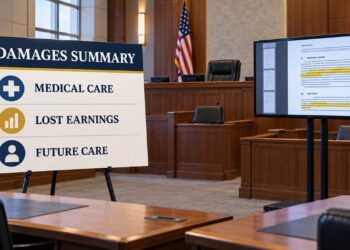
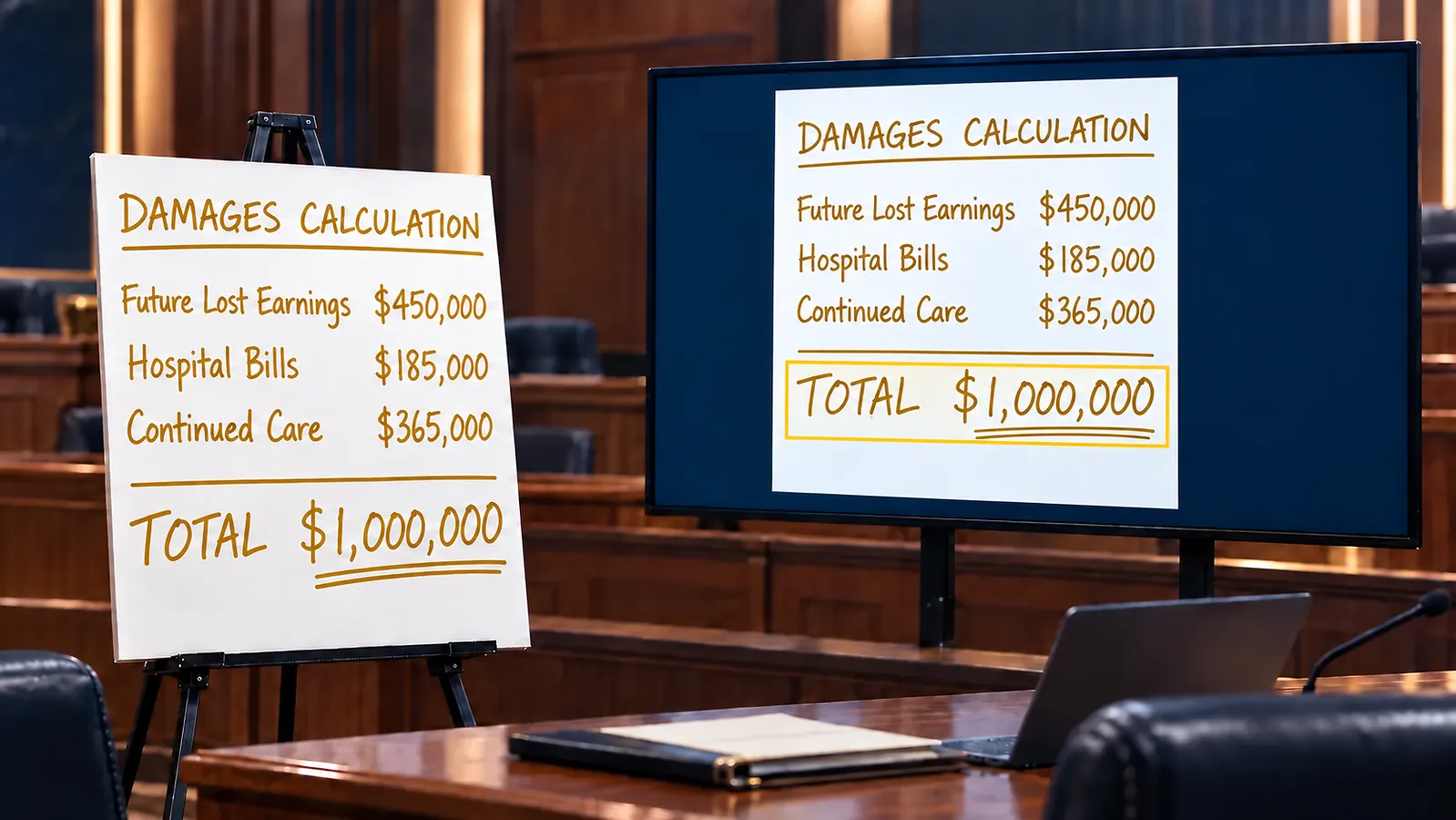
A physical exhibit can remain visible while testimony continues or while the courtroom digital screen displays something else. It can also allow a witness to write, draw, calculate, or identify information in front of the jury.
The best choice depends on the evidence. Use a foam board when continued visibility or physical interaction helps communicate the point. Use the digital display when the jury needs enlargement, highlighting, or quick retrieval.
Key Takeaways
- Foam boards and digital trial presentation can complement one another: a physical exhibit can remain visible even after the courtroom screen changes.
- A witness can write, draw, calculate, or identify information directly on a board.
- Digital presentation is useful for enlargement, highlighting, callouts, and quick retrieval.
- Information developed on a foam board may later be captured and displayed digitally. A separate Quick TechTip will explain that process.
- Every exhibit should help the jury understand the evidence without drawing attention away from the witness or the testimony.
Why Foam Boards Still Matter
I have watched courtroom presentation technology evolve from paper exhibits and easels to TrialDirector, TrialPad, PowerPoint, synchronized video, and high-resolution courtroom displays.
One lesson has remained consistent: new technology does not automatically eliminate the value of a traditional presentation method.
A foam board provides something a digital display does not always provide—a fixed visual reference. The exhibit can remain in the courtroom while the screen changes, displays another document, or goes dark.
A foam board can also become part of the testimony itself. A witness may write figures, create a list, draw on a photograph, identify a location, or complete a calculation while the jury watches.
That physical process can help jurors follow how the information develops. Instead of seeing only a completed exhibit, they see the witness create or explain it step by step.
Foam boards should still be used selectively. Too many boards can clutter the courtroom, and an exhibit that cannot be read from the jury box accomplishes little. Continued display should serve a clear purpose.
Choose the Medium That Fits the Evidence
The decision should begin with the evidence and the teaching objective—not with the available equipment.
Consider using a foam board when:
- The exhibit should remain visible for an extended period.
- A witness will write, draw, mark, or calculate on it.
- The jury needs a continuing reference point.
- The physical development of the information is part of the presentation.
Consider using the digital display when:
- A detail needs to be enlarged.
- Particular language or markings should be highlighted.
- Counsel must retrieve the exhibit quickly.
- The presentation requires callouts, comparisons, or video.
In some situations, the same exhibit can serve both purposes. A witness may develop information physically on a foam board, and the completed work may later be preserved for digital display when appropriate and permitted.
A future Quick TechTip will explain how to capture a witness-marked foam board and display the same exhibit digitally without changing the underlying exhibit.
The technology should always support the testimony. It should never become the focus of the presentation.
Remember—you are the storyteller.
Related Articles
- How Can You Convert a Witness-Marked Foam Board into a Digital Trial Exhibit?
- When Should a Trial Exhibit Remain Visible on an Easel?
- How Should You Prepare for Courtroom Technology Failure?
Learn More
- Trial & Deposition Technologies
- Silent Advocacy Series
- How Teaching Trial Technology Transformed a Generation of Trial Lawyers at Temple’s LL.M. in Trial Advocacy
- Blending Trial Technologies: Reaching Today’s Jurors Where They Are
- TrialPad with Bob Christie: Featured Pros Live Review
- Legal Education and Trial Technology Professional Archive
About the Author — Thomas G. Oakes
Thomas G. Oakes is a 45+ year legal professional in Philadelphia and the founder/editor of PhillyLegalNews.com and PhillyLegalConnect.com. He served for many years as an official court reporter in the Philadelphia Court of Common Pleas and the U.S. District Court for the Eastern District of Pennsylvania, and has worked as a freelance court reporter in state and federal courts for decades.
He holds the highest national court reporter certifications through rigorous testing, including credentials from the National Court Reporters Association and multiple state associations, including Pennsylvania, New Jersey, Delaware, and Maryland. Tom was also the principal of Thomas G. Oakes Associates, a Philadelphia-based litigation support and trial technology firm serving attorneys nationwide for more than 33 years.
In addition to courtroom work, Tom is a nationally recognized leader in trial technology and a Certified TrialDirector Trainer. He has trained lawyers, judges, law clerks, paralegals, and trial teams in courtroom presentation and technology, and taught in Temple University’s LL.M. in Trial Advocacy program (with special recognition).
He has lectured at bar associations throughout Pennsylvania and nationally for organizations including the Federation of Defense and Corporate Counsel (FDCC), the International Association of Defense Counsel (IADC), and the American Bar Association (ABA). He is also a co-founder of the FDCC Evolve program and an instructor in the FDCC Deposition Boot Camp.
Award: Temple University LL.M. in Trial Advocacy — 2013 Faculty Award for “Art of Technology in the Courtroom.”
Disclaimer
This article is for general informational and educational purposes only and does not constitute legal advice. Reading this content does not create an attorney–client relationship. If you need legal advice about a specific situation, consult a qualified attorney in the appropriate jurisdiction.
About Philadelphia Legal News
Philadelphia Legal News is an educational publication dedicated to trial advocacy, legal technology, courtroom practice, and the history of the legal profession. Drawing on more than four decades of firsthand courtroom experience, Thomas G. Oakes shares practical insights, historical perspective, and commentary designed to benefit lawyers, judges, legal professionals, law students, and anyone interested in the evolution of the legal profession.