


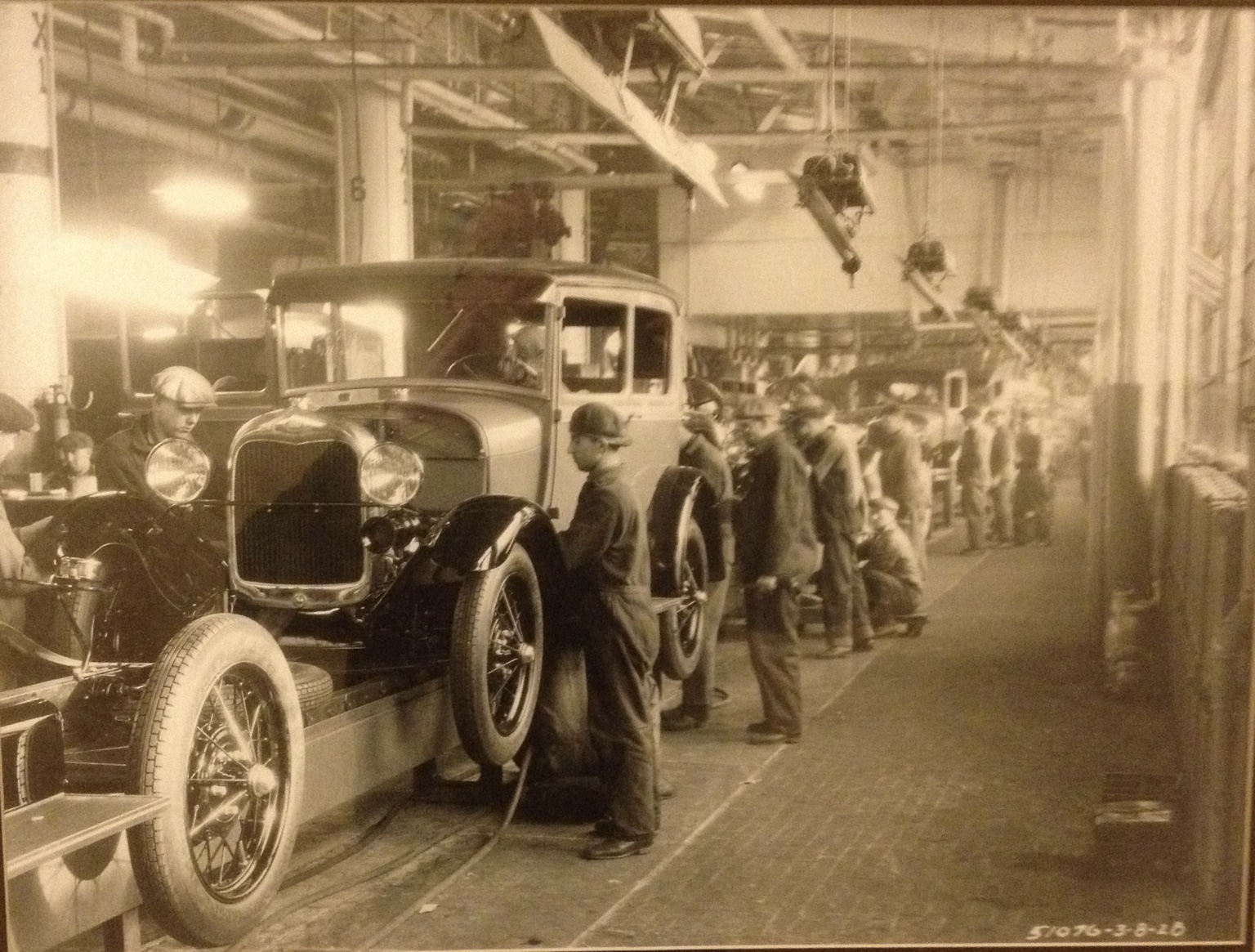
A business trip to Ford Motor Company’s World Headquarters in Dearborn, Michigan provided an unexpected lesson about innovation, technology, and professional change. While visiting a client, I spent time exploring historical exhibits featuring the 1896 Ford Quadricycle, early Model T automobiles, and photographs documenting the rise of modern manufacturing. Those exhibits offered a powerful reminder that transformative technology often begins with simple ideas, experimentation, and a willingness to embrace change—lessons that remain relevant in today’s rapidly evolving legal technology landscape.
Key Takeaways
- Innovation rarely begins with a finished product.
- Henry Ford’s earliest vehicles started as experiments.
- The Model T transformed transportation and manufacturing.
- Historical technology exhibits often reveal lessons that remain relevant today.
- The legal profession has experienced technology-driven change similar to many other industries.
- First-hand observations and original photography provide valuable perspective on the history of innovation.
Editor’s Note
Throughout my career in court reporting, litigation support, records retrieval, and trial technology, I had the privilege of working with Ford Motor Company and many of the outstanding attorneys who represented the company across the country.
From the time I left the Federal Courthouse in Philadelphia until my retirement, Ford’s Office of General Counsel, along with its local, regional, and national trial counsel, placed their trust in my firm to assist with court reporting services, records retrieval, litigation support, trial presentation technology, and complex case management projects.
Those professional relationships provided opportunities that I will always appreciate. Ford Motor Company not only became an important client, but also contributed significantly to the growth and success of my business over many years. For that, I remain deeply grateful.
This article is not intended as a discussion of Ford’s legal matters. Rather, it is a reflection on a memorable visit to Ford World Headquarters in Dearborn, Michigan, where I had the opportunity to explore exhibits documenting the company’s remarkable history of innovation.
— Thomas G. Oakes
A Visit That Became a History Lesson
Like many people, I grew up knowing the Ford name.
The Model T.
The assembly line.
Henry Ford.
The company occupies a unique place in American industrial history.
Years ago, while traveling to Dearborn, Michigan on business, I had the opportunity to visit Ford Motor Company’s World Headquarters. While the purpose of the trip was professional, some of the most memorable moments came while walking through the building and viewing the historical displays that documented the company’s origins.
Among the exhibits were reproductions and displays connected to the 1896 Ford Quadricycle, early Model T automobiles, and photographs showing the evolution of automotive manufacturing.
What struck me most was how modest the beginnings appeared when compared to the impact that followed.
The Quadricycle: A Simple Beginning
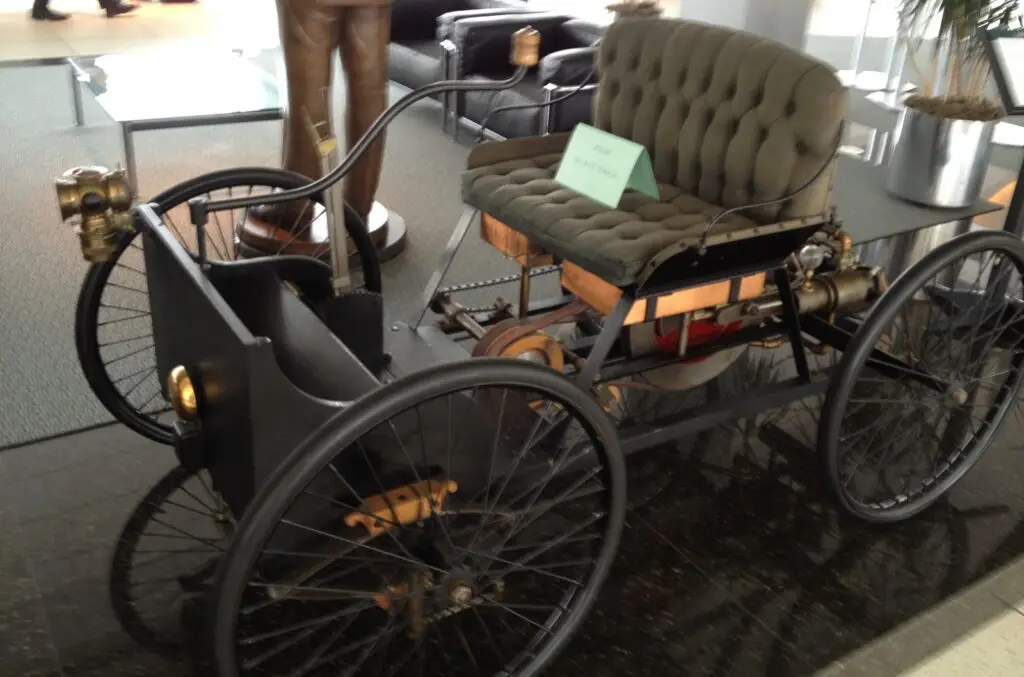
One of the exhibits featured the Ford Quadricycle, Henry Ford’s first experimental vehicle.
Looking at it today, it is easy to underestimate what it represented.
The vehicle was little more than a lightweight frame mounted on four wheels with a small engine and rudimentary controls. Yet that simple machine marked the beginning of an idea that would eventually influence transportation around the world.
Standing in front of the exhibit, I found myself thinking about how often major innovations begin with concepts that seem small or uncertain at the time.
History tends to focus on success.
The early experiments are often forgotten.
The Model T and a Changing America
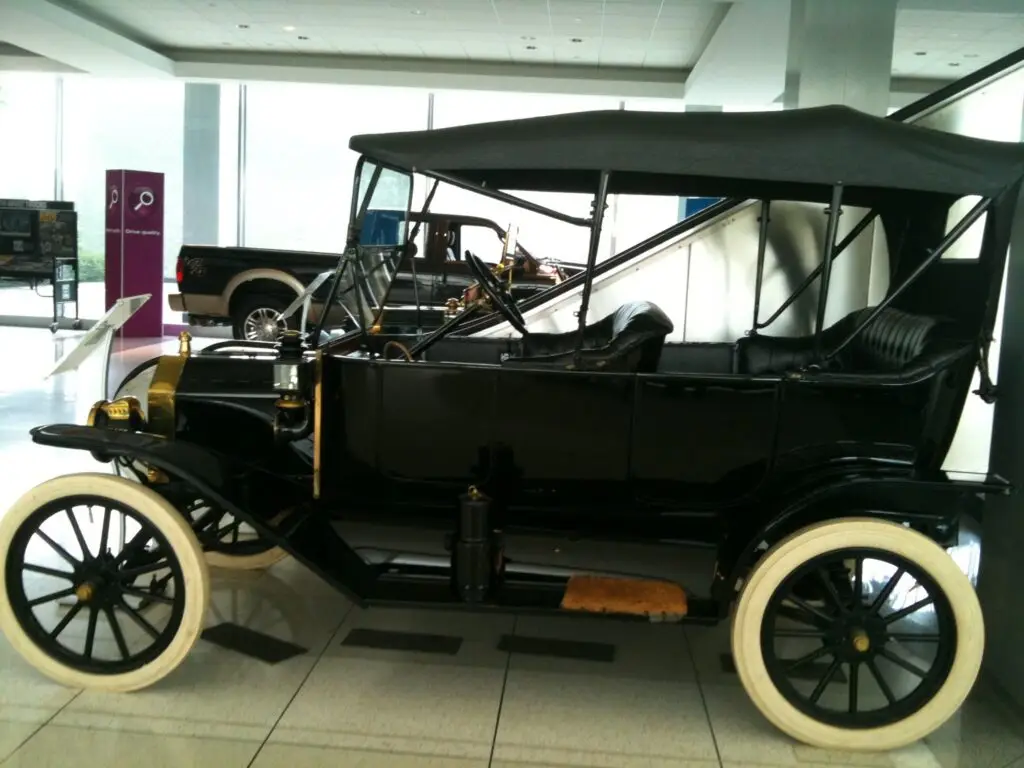
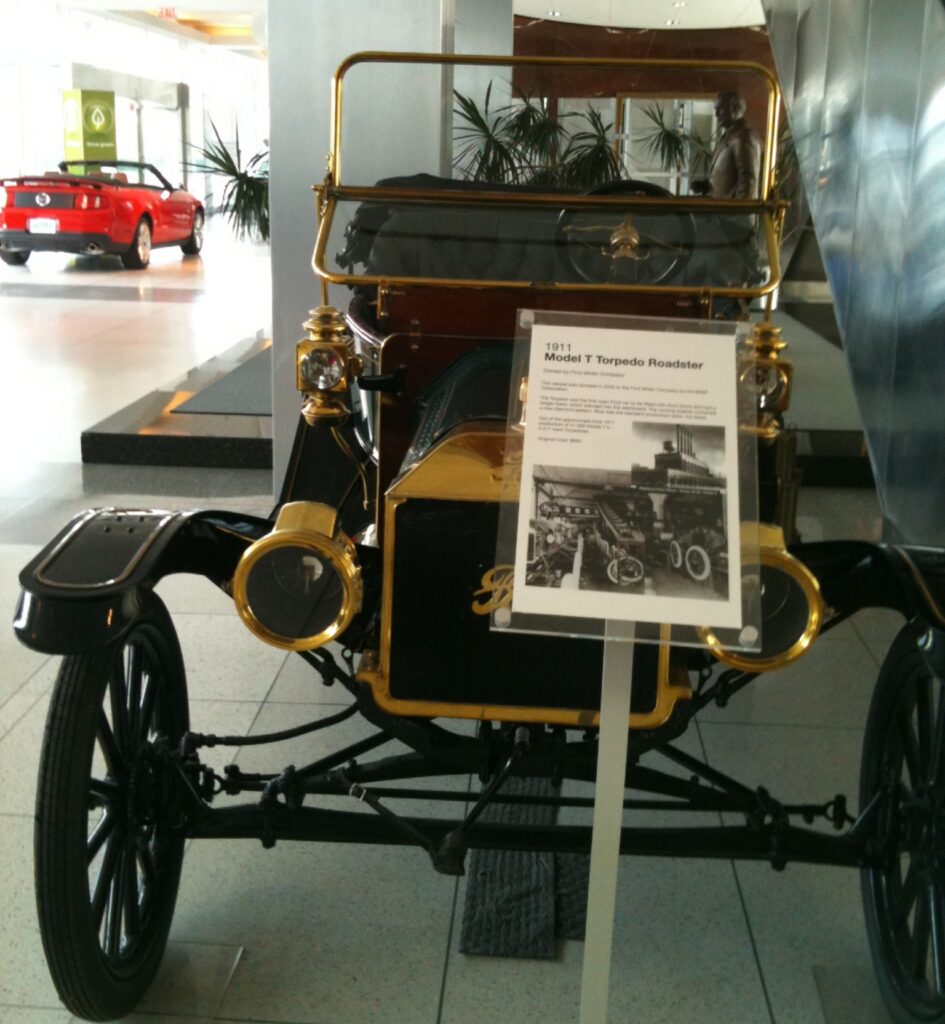
Several displays highlighted early Model T vehicles and the role they played in making automobile ownership accessible to ordinary Americans.
Prior to Ford’s manufacturing innovations, automobiles were largely considered luxury items.
The Model T helped change that.
More importantly, it helped transform daily life.
Communities became more connected.
Businesses expanded their reach.
Families gained mobility.
Entire industries emerged to support a growing automotive economy.
Technology did not simply improve transportation.
It changed how people lived.
The Photograph That Captured a Revolution
Among the exhibits was a historic photograph showing workers assembling automobiles on an early production line.
I spent more time studying that image than I expected.
The photograph captured something larger than manufacturing.
It captured a moment when a new process was beginning to reshape an industry.
Every worker had a task.
Every station had a purpose.
The system itself became part of the innovation.
Today, when we think about technological change, we often focus on devices, software, or artificial intelligence.
Ford’s history serves as a reminder that innovation is frequently about process as much as product.
Lessons Beyond the Automotive Industry
While viewing these exhibits, I found myself reflecting on another industry that has experienced tremendous technological change during my own career.
When I entered the court reporting and litigation support profession, technology looked very different than it does today.
Exhibits were often managed in boxes and binders.
Video technology was expensive and limited.
Courtroom presentation systems were uncommon.
Remote proceedings were virtually nonexistent.
The idea of cloud-based evidence management or AI-assisted workflows would have sounded like science fiction.
Today, those tools are becoming increasingly common.
The pace of change has been remarkable.
Although the industries are very different, the pattern feels familiar.
Experimentation.
Adoption.
Resistance.
Improvement.
Growth.
The same cycle that helped transform manufacturing continues to shape professional services and technology-driven industries today.
Today, those tools are becoming increasingly common. From cloud-based evidence management and AI-assisted workflows to modern trial presentation systems and remote proceedings, legal professionals now have access to technologies that would have been difficult to imagine just a few decades ago. Many of these developments are explored in our Trial & Deposition Technologies resource center.
The pace of change has been remarkable.
Innovation Is Never Finished
One aspect of the Ford exhibits that stayed with me was the realization that none of the displays represented an ending.
Each vehicle represented a step in an ongoing process.
The Quadricycle led to future designs.
The Model T led to new manufacturing methods.
The assembly line led to broader industrial transformation.
Innovation rarely stops.
It evolves.
Each generation builds upon the work of those who came before it.
Final Thoughts
My visit to Ford World Headquarters began as a business trip and became an unexpected lesson in innovation.
The exhibits reminded me that every significant advancement—whether in transportation, manufacturing, communications, education, or technology—begins with individuals willing to test new ideas and challenge existing methods.
Looking at the Quadricycle, the Model T, and the historic assembly-line photographs, it was impossible not to appreciate how far technology had advanced.
It was equally impossible not to wonder what today’s emerging innovations may look like a century from now.
History has a way of putting progress into perspective.
Sometimes all it takes is a walk through a lobby and a few photographs to be reminded of that fact.
Related Reading:
Continue Exploring Legal Technology & Professional Development
Interested in legal technology, trial presentation, professional development, and the future of litigation support? Explore additional resources from Philly Legal News.
- Legal Education, Trial Technology & Professional Archive
Our cornerstone archive featuring legal education, trial technology, professional development, litigation support, and industry history. - Trial & Deposition Technologies
Coverage of courtroom technology, remote proceedings, trial presentation systems, evidence management, and litigation software. - Silent Advocacy & Trial Strategy
Articles exploring jury communication, trial preparation, courtroom persuasion, and litigation strategy.
Related Topics: Trial Technology • Legal Education • Professional Development • Litigation Support • Courtroom Innovation • Trial Strategy
Explore More From Philly Legal News
Philly Legal News continues to expand its coverage of legal technology, professional development, trial presentation, litigation support, and industry history through articles, archives, and video content.
Visit our Philly Legal News YouTube Channel for additional discussions, technology reviews, professional insights, and educational content from across the legal profession.
Frequently Asked Questions
What is the Ford Quadricycle?
The Ford Quadricycle was Henry Ford’s first successful gasoline-powered vehicle, completed in 1896. It is widely regarded as the starting point of Ford Motor Company’s history and one of the earliest examples of automotive experimentation in America.
Why is the Model T considered historically important?
The Model T helped make automobile ownership affordable for ordinary Americans. Combined with Ford’s manufacturing innovations, it transformed transportation, commerce, and daily life throughout the twentieth century.
What is the significance of the assembly line?
Ford’s assembly-line manufacturing process dramatically increased production efficiency and reduced costs. The approach influenced not only automobile manufacturing but also countless other industries around the world.
How does Ford’s history relate to legal technology?
Ford’s story demonstrates that innovation often begins with experimentation and gradual improvement. Similar patterns can be seen in legal technology, where tools such as digital exhibits, cloud-based case management, remote proceedings, artificial intelligence, and trial presentation software have transformed professional practice over time.
Why did Thomas G. Oakes visit Ford World Headquarters?
The visit occurred during a professional engagement involving Ford Motor Company. While conducting business, Thomas G. Oakes had the opportunity to explore Ford’s historical exhibits and photograph portions of the company’s heritage collection.
Are the photographs in this article original?
Yes. All photographs appearing in this article were taken by Thomas G. Oakes during a visit to Ford Motor Company’s World Headquarters in Dearborn, Michigan.
What lessons can legal professionals learn from Ford’s history?
Ford’s history illustrates that meaningful change rarely happens overnight. Innovation typically follows a cycle of experimentation, adoption, refinement, and growth—a pattern that continues to influence the legal profession and the development of litigation technology today.
Why is innovation important in the legal profession?
Technology has transformed nearly every aspect of legal practice, including court reporting, litigation support, records management, trial presentation, remote proceedings, and case preparation. Understanding how innovation develops can help legal professionals better adapt to future changes.
About the Author — Thomas G. Oakes
Thomas G. Oakes is a 45+ year legal professional in Philadelphia and the founder/editor of PhillyLegalNews.com and PhillyLegalConnect.com. He served for many years as an official court reporter in the Philadelphia Court of Common Pleas and the U.S. District Court for the Eastern District of Pennsylvania, and has worked as a freelance court reporter in state and federal courts for decades.
In addition to courtroom work, Tom is a nationally recognized leader in trial technology. He has trained lawyers, judges, and law students in TrialDirector and courtroom presentation, taught in Temple University’s LL.M. in Trial Advocacy technology curriculum (with special recognition), and has lectured nationally and internationally for organizations including the FDCC and IADC. He also founded the FDCC “FedTech U” program and has instructed in the FDCC Deposition Boot Camp.
Award: Temple University LL.M. in Trial Advocacy — 2013 Faculty Award for “Art of Technology in the Courtroom.”
Tom, prior to his retirement, was the principal of Thomas G. Oakes Associates, a Philadelphia-based litigation-support and trial-technology firm serving attorneys nationwide for more than 33 years.
Disclaimer
This article is for general informational and educational purposes only and does not constitute legal advice. Reading this content does not create an attorney–client relationship. If you need legal advice about a specific situation, consult a qualified attorney in the appropriate jurisdiction.